
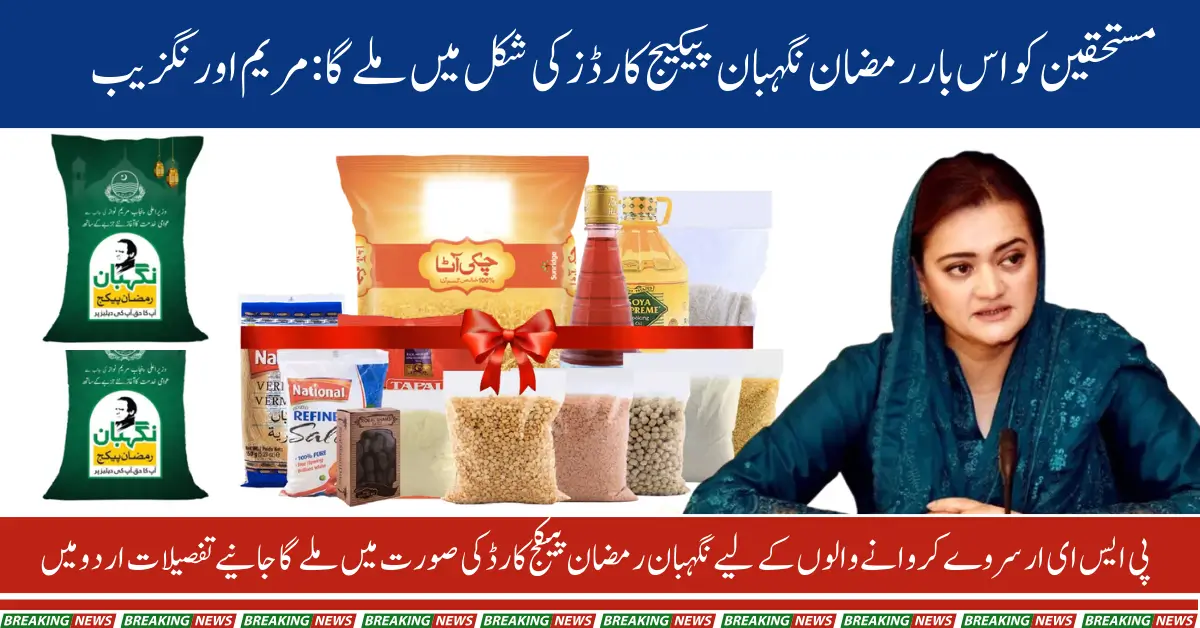
Ramadan Nigehban Package Card
The Punjab government completed the Ramadan Nigehban Package 2026 with the holy month (February–March 2026). It gave Rs 10,000 in cash to about 4.2 million deserving families across Punjab. The province set aside Rs 47 billion for this relief effort.
The Nigehban Card stood at the centre of the package. This smart welfare card let families withdraw cash from ATMs. It also supported secure digital transactions across Punjab.
The government has closed registration now that Ramadan 2026 is complete. Officials selected families from the Punjab Socio-Economic Registry (PSER). Applicants checked eligibility by sending their 13-digit CNIC number by SMS to 8070. Nigehban Dastarkhwan iftar tables and Sahulat Bazaars ran alongside the package. The bazaars offered essential items at subsidised rates during the holy month.

For a fuller overview of the whole programme, read our companion guide on the CM Punjab Nigahban Ramazan Package, which covers the announcement, coverage and door-to-door distribution in detail.
Ramadan Nigehban Package 2026: Key Facts
Chief Minister Maryam Nawaz Sharif set clear eligibility rules. Only families registered in the PSER survey could receive the package. The PSER survey confirmed each family’s details.
The Punjab government announced the Ramadan Nigehban Package 2026 ahead of the holy month. It aimed to support low-income families with direct cash relief. The initiative targeted financially vulnerable households across the province. The Rs 10,000 assistance helped families meet essential expenses during Ramadan.
District administrations delivered the Nigehban Cards to doorsteps during Ramadan 2026. Families withdrew the Rs 10,000 from Bank of Punjab ATMs or branchless banking agents. Existing ration card holders also received Rs 10,000 for Ramadan. They had previously received Rs 3,000 per month.
Key Features of the Ramadan Nigehban Package 2026
Each eligible family received Rs 10,000 in cash through the Nigehban Card. The smart card worked at Bank of Punjab ATMs and branchless banking agents. The Rs 47 billion allocation covered around 4.2 million families. Families needed a valid CNIC and a registered mobile number. They also needed PSER survey enrolment and a monthly household income below Rs 45,000. Priority went to the poorest verified households.
How the 2026 Registration Worked
Online Registration: Families created an account on the PSER portal. They entered their CNIC and registered mobile number. The system sent a confirmation SMS after verification.
In-Person Registration: People without internet access visited a Union Council office, tehsil office or PSER camp. They carried their CNIC and registered mobile number. Staff helped them complete the PSER form. After submission, officials shared instructions about card delivery and activation.
Application Deadline (Closed)
The registration period closed on February 15, 2026, before Ramadan began. The government is not accepting new applications now that the programme has ended.
The 2026 package formed part of a broader relief effort for low-income families during Ramadan. In addition to direct cash support, it funded iftar tables and subsidised bazaars across Punjab. The Punjab government published the official programme details on the Nigehban Card portal.
Conclusion
The Ramadan Nigehban Package 2026 gave Rs 10,000 each to about 4.2 million verified low-income families in Punjab. Teams delivered the Nigehban Cards directly to family doorsteps. Afterwards, families withdrew the cash through ATMs and branchless banking.
Registration closed on February 15, 2026, and the programme is now complete. However, families should keep their PSER survey records up to date. Updated records will keep them eligible for future Punjab welfare schemes.