

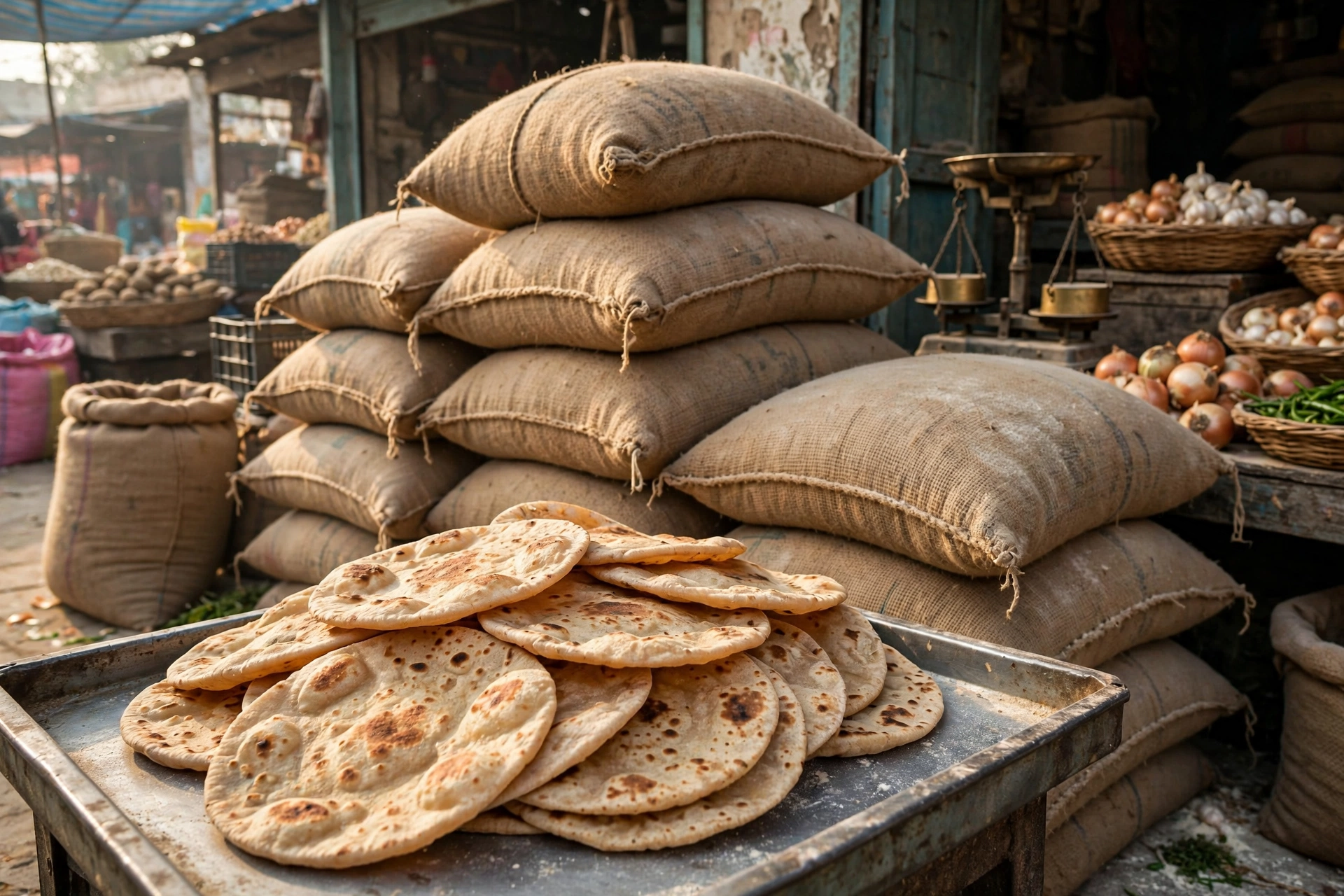
Punjab Chief Minister Maryam Nawaz Sharif has approved a Rs 10 billion subsidy to keep flour affordable across the province. Officials took the decision at an emergency video-link meeting on Saturday, 10 October 2026, where the chief minister expressed strong displeasure over rising atta prices and directed officials to ensure cheap flour and wheat for the public under all circumstances.
What was decided
Three main decisions came out of the meeting, according to the Chief Minister’s Office. Furthermore, Dawn, Pakistan Today, UrduPoint and ProPakistani reported the announcement.
- A Rs 10 billion subsidy to ensure the uninterrupted supply of flour at affordable rates.
- A bigger quota of subsidised government wheat for flour mills, supplied at Rs 3,800 per maund (40 kg).
- A firm direction that the provision of affordable flour and low-cost roti will continue.
Moreover, the meeting also voiced concern over what it described as an artificial increase in wheat and flour prices in the open market.
Why flour prices rose
The subsidy follows one of the sharpest weekly flour price jumps of the year. The Pakistan Bureau of Statistics recorded a 5.69 percent rise in flour prices in a single week, while wheat in Punjab’s open market touched about Rs 5,200 per 40 kg after climbing Rs 400 in four days.
A 20 kg flour bag now sells for as much as Rs 3,400 in Karachi, Peshawar and Islamabad. Within Punjab, Rawalpindi saw the sharpest jump, up Rs 347 to Rs 3,333, followed by Sialkot at Rs 3,133 and Multan at Rs 2,866. Lahore (Rs 2,300) and Faisalabad (Rs 2,200) remained unchanged, close to the controlled rate.
Notably, just three days before the subsidy decision, the Punjab Food Department had said supply across the province was normal, with mills supplying the equivalent of 470,845 ten-kilogram bags in a single day, nearly half of it milled from government wheat and sold at Rs 1,100 a bag.
What it means for your household
The official rate for a 10 kg bag of flour milled from government wheat is Rs 1,100. By raising the quota of wheat supplied to mills at Rs 3,800 per maund, the government aims to push more flour into the market at the controlled rate and pull shop prices back down toward it.
| City | Price (Rs) | Weekly change |
|---|---|---|
| Lahore | 2,300 | No change |
| Faisalabad | 2,200 | No change |
| Rawalpindi | 3,333 | Up 347 |
| Sialkot | 3,133 | Up 333 |
| Multan | 2,866 | Up 66 |
| Karachi, Islamabad, Peshawar | 3,400 | Up to 400 higher |
What is confirmed and what is still reported
The Rs 10 billion approval, the Rs 3,800 per maund wheat rate and the quota increase: multiple outlets citing the Chief Minister’s Office confirm them. However, one point of honesty: by the evening of 10 October, the government had published no written notification of the subsidy, so treat these figures as announced rather than formally notified.
Separately, one outlet has reported additional specific measures, including a rise in daily wheat release to 12,000 tons from 12 October, fixed maximum prices for private flour bags, direct flour supply to 22,000 tandoors to hold a 150-gram roti at Rs 20, and a Mazdoor Roti Card offering 30 rotis a day at Rs 10 each for daily-wage workers. However, no official notification has confirmed these details so far. We will update this article when the government issues written orders.
Part of a wider relief push
The flour subsidy is not happening in isolation. At the federal level, Prime Minister Shehbaz Sharif has announced that the fuel subsidy scheme will continue, with Rs 75 billion allocated and more than 10 million beneficiaries registered.
Punjab is also running the CM Punjab Ration Card for monthly food support, while the federal Utility Stores Corporation has shut down and made way for direct BISP cash relief. For more scheme updates, visit 8171passgov.com.pk.
What to watch next
Still, announcements are only the first step. The real test is whether the extra wheat quota reaches flour mills quickly and whether retail prices in cities like Rawalpindi and Sialkot actually fall back toward the official rates. Meanwhile, keep an eye on the official notification and the weekly price data.
FAQs
What is the Punjab flour subsidy 2026? It is a Rs 10 billion package approved on 10 October 2026 to keep flour affordable, mainly by giving flour mills a larger quota of subsidised government wheat at Rs 3,800 per maund.
What is the official price of a 10 kg atta bag in Punjab? Rs 1,100 for flour milled from government wheat, according to the Punjab Food Department.
Will roti really cost Rs 20 at tandoors? One outlet has reported a plan for 22,000 tandoors to receive direct flour supply for Rs 20 rotis, but no official notification has confirmed it yet.
Has the subsidy been formally notified? As of 12 October 2026, officials have announced and widely reported the approval, but officials have published no written notification. Therefore, treat the figures as announced for now.
We based this article on the Chief Minister’s Office statement as reported by Dawn, Pakistan Today, UrduPoint, ProPakistani and the Associated Press of Pakistan, along with Pakistan Bureau of Statistics price data. Finally, we will update the figures as officials issue notifications.