

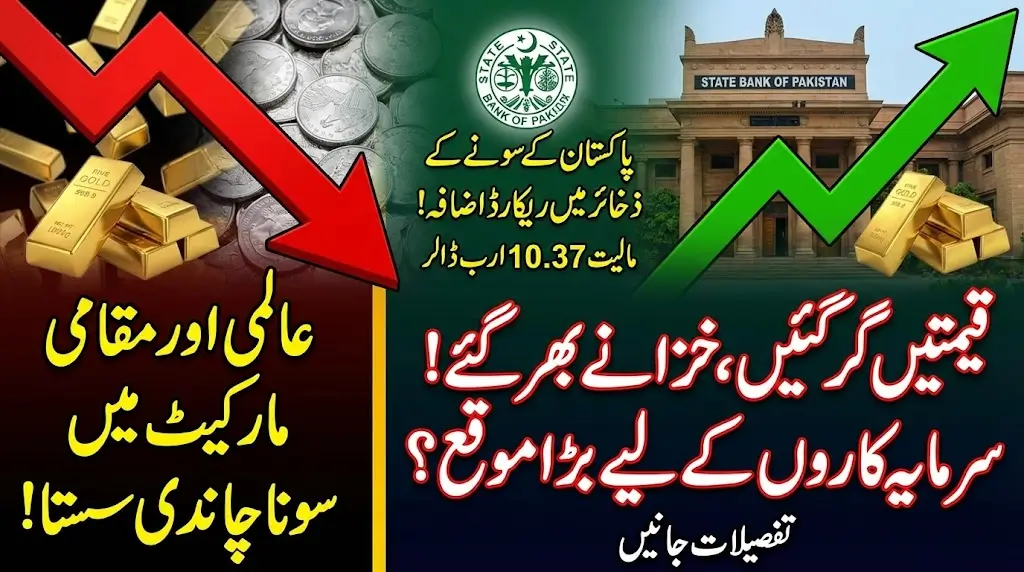
Global and Local Gold and Silver Prices
The trend of declining gold and silver prices continues in both global and local markets. On Monday, international bullion markets recorded a fall in the price of gold and silver, affecting investors and traders worldwide. Market analysts attribute this decline to a slowdown in purchasing activities by major buyers, including China and Russia, and profit-taking by global market players.
Investors are carefully monitoring these changes as they directly impact local markets. The global decline has influenced the pricing of precious metals in Pakistan, reflecting shifts in both per tola and per gram rates. Market participants are assessing the long-term implications of these movements on investment strategies and import-export activities.
Global Gold and Silver Market Trends
In the international market, gold per ounce dropped by $32, reaching $5,010, while silver per ounce fell by 55 cents to $76.80. These declines are primarily driven by reduced demand from leading buyers and strategic profit-taking by traders who aim to maximise gains amid volatile conditions.
- Major contributors to the slowdown include China and Russia, two of the largest purchasers of gold and silver globally.
- Traders are temporarily reducing transactions to assess market stability.
- Global economic uncertainties are encouraging cautious investment behaviour.
These global price trends serve as a benchmark for local markets, influencing import costs and investor sentiment across various countries.
Also read: Punjab Introduces CM Student Card for Free Education, Scholarships, and Travel
Local Gold and Silver Prices in Pakistan
Local bullion markets in Pakistan have also reflected changes in global prices, though with slight variations in figures. Gold per tola increased by Rs3,200 to Rs523,762, while the price per ten grams decreased by Rs2,743 to Rs449,041. Silver followed a downward trend, with prices per tola falling by Rs55 to Rs8,164 and per ten grams decreasing by Rs47 to Rs6,999.
- Gold per tola: Rs523,762
- Gold per 10 grams: Rs449,041
- Silver per tola: Rs8,164
- Silver per 10 grams: Rs6,999
Local traders attribute these mixed trends to global price fluctuations and domestic demand variations. Many investors are observing market behaviour before making significant purchases, which is expected to stabilise prices in the near term.
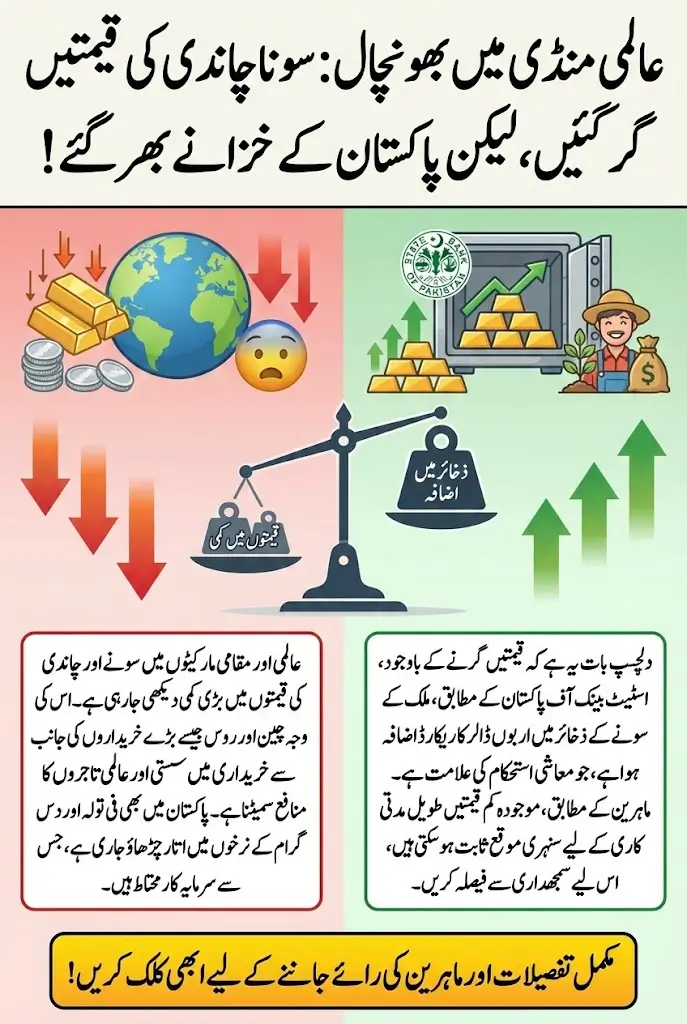
Pakistan’s Gold Reserves and Value Growth
Despite the declining gold and silver prices in markets, Pakistan’s gold reserves have continued to grow steadily. According to the latest data from the State Bank of Pakistan, the country holds 64.76 tons of gold, valued at $10.37 billion. This marks a significant increase of $1.27 billion during January 2026.
The growth of gold reserves over the fiscal year indicates strong asset accumulation:
| Month/Year | Gold Reserves Value (USD Billion) | Change |
|---|---|---|
| June 2025 | 6.84 | – |
| January 2026 | 10.37 | +1.27 |
| First 7 months FY 2025-26 | 10.37 | +3.5 |
The steady rise in reserves reflects Pakistan’s strategic efforts to strengthen financial stability and hedge against currency fluctuations. While global prices fluctuate, holding physical gold provides a secure store of value for the country.
Also read: Transparent Distribution of Ramadan Nigahban Package Cards Starts
Implications for Investors and Market Outlook
The decline in gold and silver prices, combined with the increase in national reserves,s presents a mixed picture for investors. On one hand, lower prices may offer opportunities for buying gold and silver at a reduced cost. On the other hand, cautious trading and global uncertainties suggest that prices may continue to experience volatility in the short term.
- Investors may benefit from monitoring both global and local price trends.
- The increase in gold reserves ensures a degree of financial security for the country.
- Market analysts recommend strategic buying and long-term investment in physical gold.
Overall, while gold and silver prices face short-term declines, the growth in reserves and cautious market strategies can provide stability and potential benefits for both investors and the national economy.