

Petrol and Diesel Prices in Pakistan Reduced After OGRA Review
The Petroleum Division announced a reduction in petrol and diesel prices following changes in international oil markets. The decision was taken late at night after reviewing recommendations from the Oil and Gas Regulatory Authority. The revision applies to the current pricing fortnight and reflects lower global fuel trends.
Petrol and diesel prices in Pakistan are revised regularly to align with market conditions. These changes directly affect transport costs, household budgets, and overall inflation. Even a small reduction brings relief to millions of consumers across the country.
Key factors behind the revision include:
- Decline in international oil prices
- OGRA’s pricing assessment
- Government review of revenue needs
Gold Prices in Pakistan Last day of Year: Drop of Rs. 2,500 Marks Market Decline
Petrol Price Cut and Its Effect on Consumers
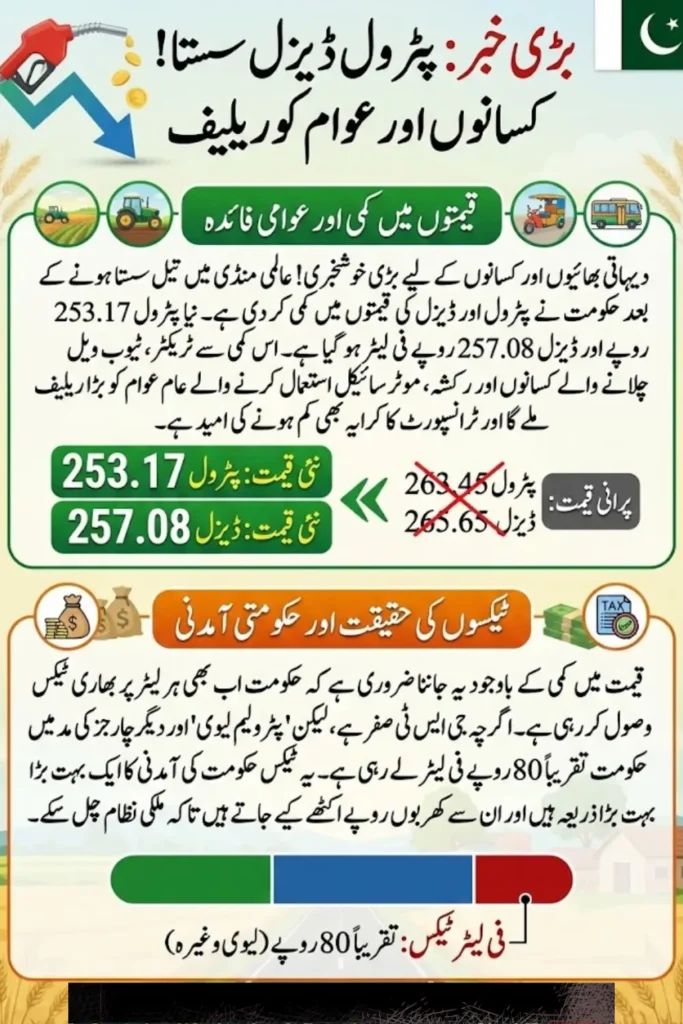
The ex-depot price of petrol has been reduced to Rs253.17 per litre from Rs263.45. Petrol is mainly used in private vehicles, motorcycles, rickshaws, and small cars. The reduction supports middle- and lower-middle-income groups that depend on petrol for daily travel.
Lower petrol prices can also help reduce commuting expenses in urban areas. This relief is important as fuel costs directly influence household spending on transport and daily needs.
Petrol price comparison:
| Item | Previous Price | New Price |
|---|---|---|
| Petrol (MS) | Rs263.45 | Rs253.17 |
Diesel Price Reduction and Inflation Link
High-Speed Diesel prices have been cut to Rs257.08 per litre from Rs265.65 for the current fortnight. Diesel is the backbone of Pakistan’s transport and agricultural sectors. Most buses, trucks, and trains rely on HSD for operations.
Diesel prices are considered inflationary because they affect food supply chains. Higher diesel costs raise transport and farming expenses, which then increase vegetable and food prices across markets.
Main uses of diesel include:
- Heavy transport vehicles
- Agricultural machinery
- Railways and tube-wells
Source:https://www.dawn.com/news/1964303
Taxes, Levies, and Fuel Pricing Structure
Although GST on petroleum products remains zero, fuel prices still include multiple charges. The government collects petrol levy, climate support levy, customs duty, and distribution margins as part of the final price.
These charges ensure steady revenue despite price cuts. Petrol and diesel remain major contributors to the national budget through indirect taxation.
Global Citizenship of Indonesia Program: A New Long-Term Residency Path Check Now
Fuel charges breakdown:
| Charge Type | Approximate Amount |
|---|---|
| Petrol levy | Rs82 (petrol), Rs78 (diesel) |
| Climate support levy | Rs2.50 per litre |
| Customs duty | Rs16–17 per litre |
| Distribution margins | Around Rs17 per litre |
Fuel Sales and Government Revenue Importance
Petrol and HSD are the largest revenue-generating petroleum products in Pakistan. Monthly sales average between 700,000 and 800,000 tonnes, far higher than kerosene demand.
In FY2025, the government collected Rs1.161 trillion through petroleum levy alone. This figure is expected to rise by about 27 percent to Rs1.470 trillion in the current fiscal year, highlighting fuel’s fiscal importance.
FAQs
Why were petrol and diesel prices reduced?
The prices were revised due to lower global oil prices and OGRA recommendations.
Does GST apply to petrol and diesel?
No, GST is zero, but other levies and duties are charged.
Why is diesel considered inflationary?
Diesel affects transport and agriculture, which influence food prices.
Are fuel prices a major revenue source?
Yes, petrol and diesel generate over a trillion rupees annually through levies.
Suzuki Swift Price & Installment Plans Latest Variants or Features Check Now