

Sindh Cabinet Wheat Supply Decision
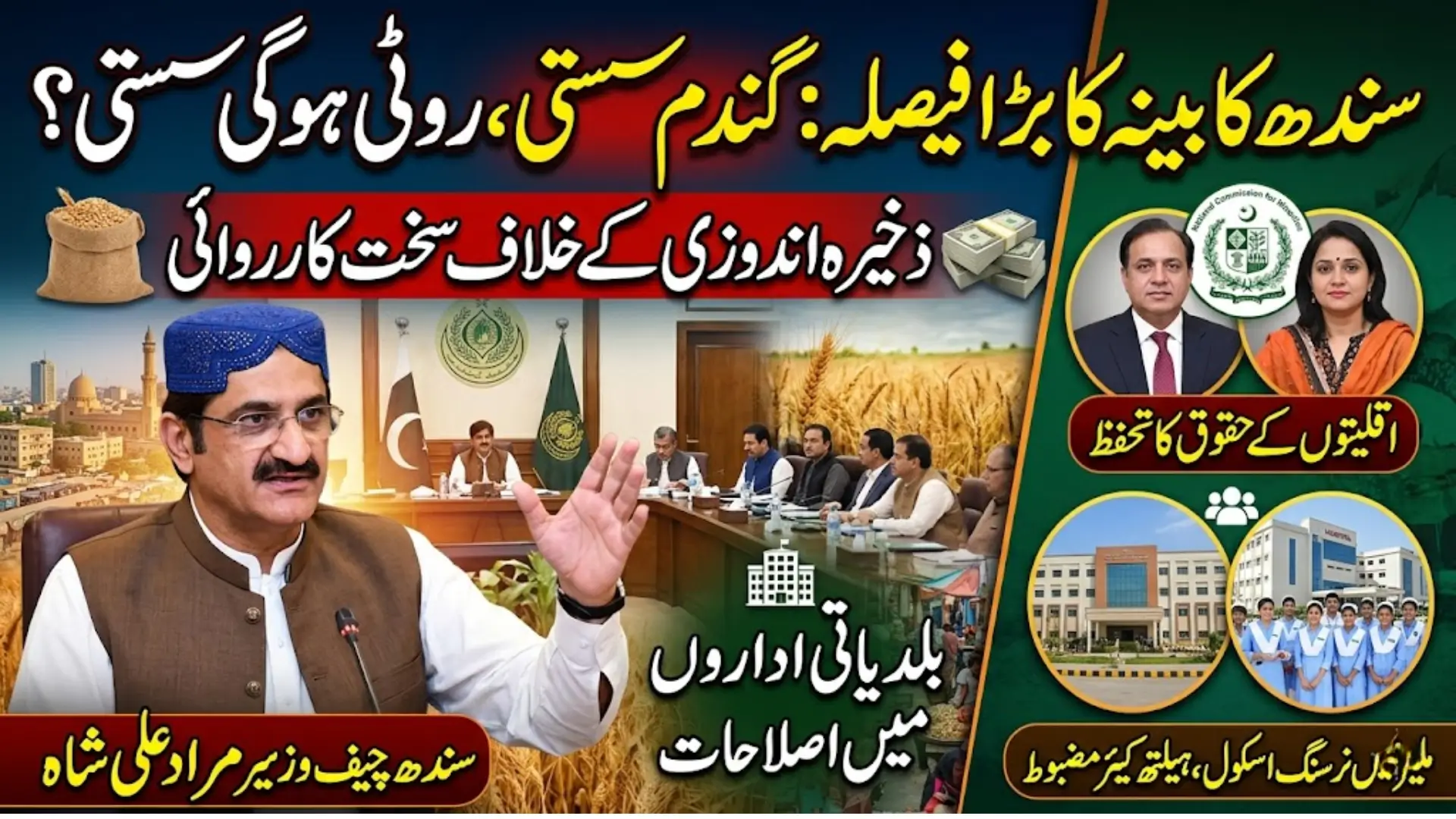
Sindh Cabinet Wheat Supply Decision. The Sindh government has taken several important decisions aimed at stabilizing wheat prices, strengthening local government institutions, and improving healthcare education in the province. These decisions were approved during a cabinet meeting chaired by Sindh Chief Minister Murad Ali Shah.
The cabinet discussed multiple policy matters including wheat supply to traders and mills, nominations for the National Commission for Minorities, reforms in local government administration, and the establishment of a nursing school in Malir. These initiatives are intended to improve economic stability, promote good governance, and expand healthcare education facilities in the province.
Sindh Cabinet Wheat Supply Decision to Stabilize Prices
One of the most important decisions taken during the meeting was related to the Sindh Cabinet wheat supply decision aimed at controlling market prices and ensuring the availability of wheat across the province.
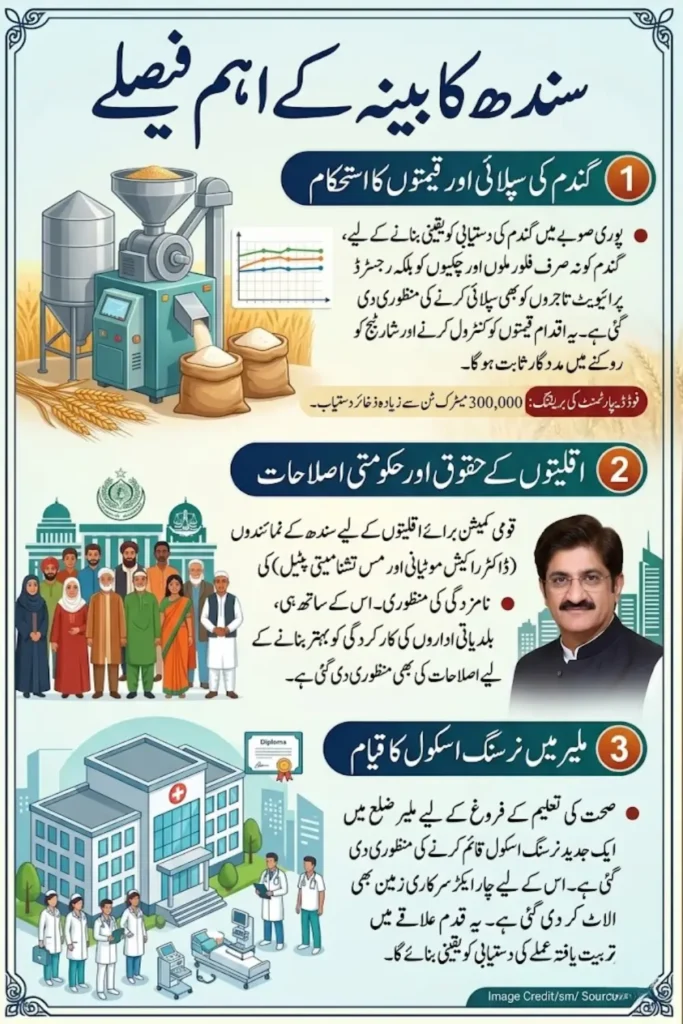
The cabinet approved a policy under which wheat will be supplied not only to flour mills and chakkis (grinders) but also to licensed private traders. The decision is expected to improve wheat distribution and prevent shortages in the market.
During the briefing, the Sindh Food Department informed the cabinet that licensed traders will be able to purchase a 100-kilogram sack of wheat for Rs 8,000 under the government’s approved rate.
This measure is expected to help stabilize flour prices and ensure that wheat remains accessible to the public.
Large Wheat Stock Available for Market Release
Officials from the Food Department informed the cabinet that the province currently has a significant stock of wheat available for distribution.
According to the briefing, more than 300,000 metric tons of wheat are available for release into the market. The controlled release of this stock will help maintain supply and prevent price increases.
The cabinet was also informed that the sale of wheat from government reserves is expected to generate more than Rs 30 billion in revenue for the provincial government.
This revenue will also help reduce the financial burden related to wheat procurement and storage.
Chief Minister’s Directive to Prevent Hoarding
During the meeting, Chief Minister Murad Ali Shah emphasized the importance of strict monitoring to prevent hoarding and artificial shortages in the wheat market.
He directed the relevant departments and district administrations to closely monitor the wheat supply chain and take immediate action against anyone involved in hoarding or illegal storage.
The chief minister stated that maintaining a stable supply of wheat and controlling prices is essential to protect consumers from unnecessary financial pressure.
Sindh Representatives Nominated for National Commission for Minorities
Another key decision taken by the cabinet was the nomination of representatives from Sindh for the National Commission for Minorities.
The cabinet approved the nomination of Dr. Rakesh Motiani and Miss Tishnamayti Patel as representatives of Sindh in the national body.
The commission plays an important role in protecting the rights of minority communities and addressing issues related to equality and social inclusion in Pakistan.
The nomination of representatives from Sindh will ensure that the concerns of minority communities in the province are properly represented at the national level.
Measures to Strengthen Local Government System
The Sindh cabinet also approved several reforms aimed at improving the functioning of local government institutions.
One of the major steps includes changes in the administrative structure of the Shaheed Benazirabad Municipal Corporation.
Under the newly approved structure, the mayor or administrator will serve as ex-officio members of the governing board. This step is expected to improve coordination between administrative leadership and the operational management of the municipal corporation.
Inclusion of Senior Officers in the Board
The new administrative framework will also include senior officials from the local government and finance departments as members of the municipal board.
The presence of these officers is expected to improve financial oversight, accountability, and administrative efficiency within the municipal corporation.
By bringing experienced officials into the governance structure, the government aims to strengthen transparency and improve public service delivery at the local level.
Approval for Nursing School in Malir
In addition to economic and governance reforms, the cabinet also approved a major initiative to expand healthcare education in Sindh.
The cabinet approved the establishment of a nursing school in Malir district to help train future healthcare professionals.
For this purpose, four acres of government land in Taluka Ibrahim Hyderi have been allocated for the project.
The nursing school will be established in collaboration with Hassan Suleman Memorial Hospital, which will provide practical training opportunities for nursing students.
This project is expected to improve the availability of trained nursing staff and strengthen the healthcare system in the region.
Importance of the Nursing Education Project
The establishment of the nursing school will contribute significantly to healthcare development in the province.
With increasing demand for trained healthcare professionals, the project will help prepare qualified nurses who can serve in hospitals and healthcare institutions across the region.
The collaboration with Hassan Suleman Memorial Hospital will also ensure that students receive practical training and exposure to modern medical practices.
Conclusion
The recent decisions taken by the Sindh cabinet demonstrate the government’s commitment to economic stability, social inclusion, and institutional development.
The Sindh Cabinet wheat supply decision aims to stabilize wheat prices and ensure a steady supply of essential food items in the market. At the same time, the nomination of representatives to the National Commission for Minorities highlights the government’s efforts to promote minority rights.
Reforms in the Shaheed Benazirabad Municipal Corporation and the approval of a nursing school in Malir further reflect the government’s focus on strengthening local governance and improving healthcare education.