
Sindh e-Stamping System
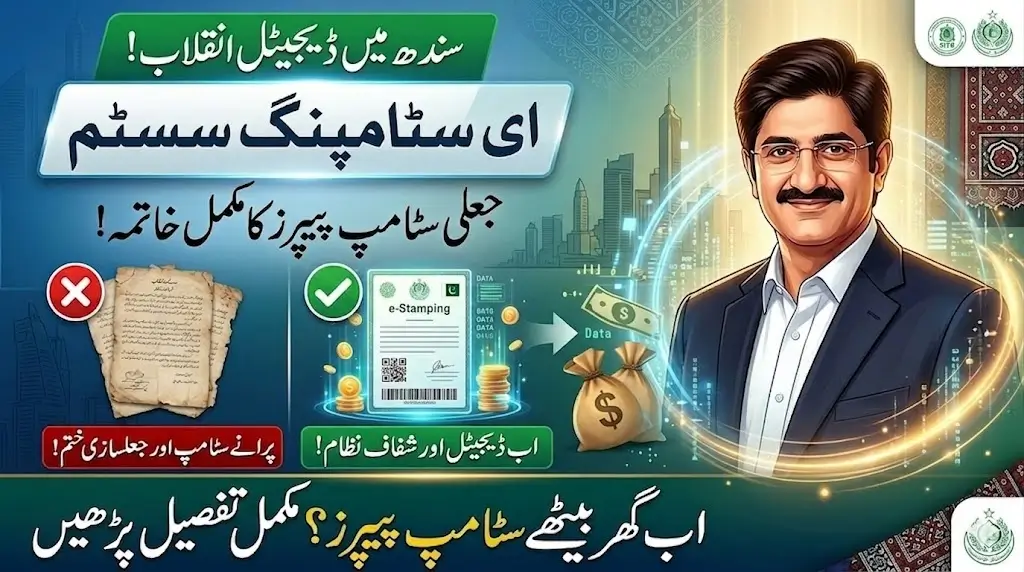
In a significant step toward modernizing governance, Sindh Chief Minister Syed Murad Ali Shah has launched an expanded digital governance initiative focused on the Sindh e-Stamping system. The initiative aims to make government services more transparent, efficient, and accessible for citizens while eliminating long-standing irregularities in documentation.
The launch ceremony, held at CM House, was attended by provincial ministers including Dr Azra Fazal Pechuho and Syed Sardar Shah, senior bureaucrats, and officials from the Sindh Information Technology Company (SITC) and the Board of Revenue Sindh. The event marked the signing of a Master Service Level Agreement (MSLA) and Service Order for the continued rollout of the e-Stamping system across the province.
What is the e-Stamping System?
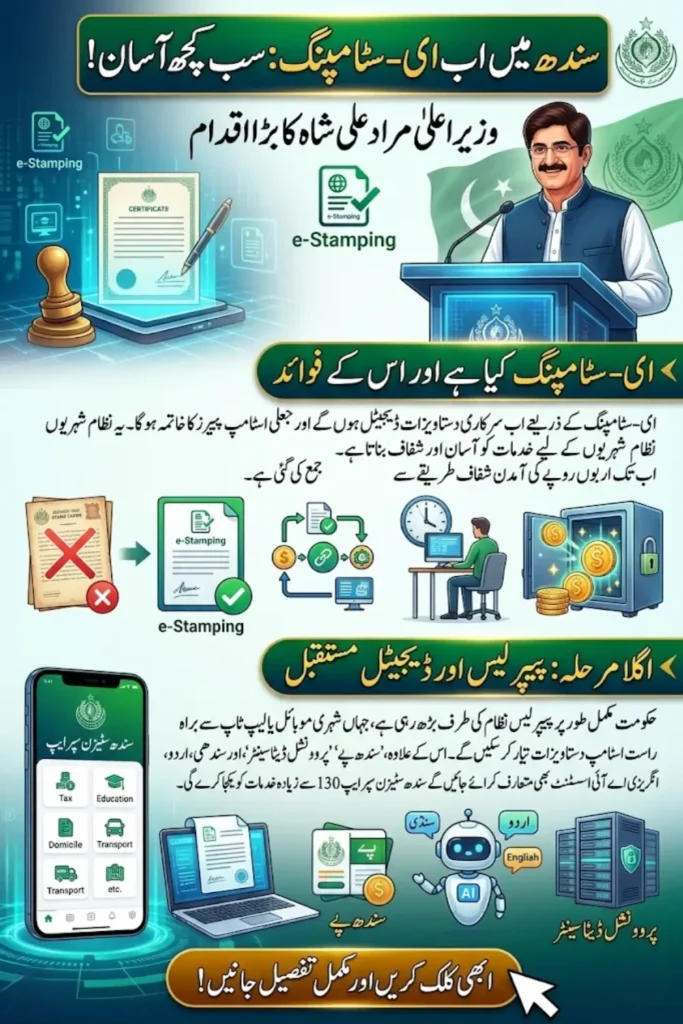
The Sindh e-Stamping system is a technology-driven platform designed to digitise government documentation, prevent the circulation of fake stamp papers, and simplify services for citizens. Since SITC took over the system, over 730,000 challans have been processed, generating Rs12.8 billion in a transparent and efficient manner.
CM Murad Ali Shah emphasised that the system’s importance goes beyond revenue collection. It addresses fraudulent practices like backdated documentation and helps citizens avoid long queues at government offices. “This initiative goes beyond technology—it aims to rebuild confidence and strengthen the bond between the Sindh government and its citizens,” he stated.
Key Benefits of the e-Stamping System
- Eliminates fake stamp papers and backdated documents.
- Reduces corruption by ensuring transactions are traceable and transparent.
- Saves time for citizens, ending the need to visit multiple offices for basic services.
- Boosts revenue collection in a secure and efficient way.
The Chief Minister noted that Sindh, being the most urbanized and economically active province in Pakistan, requires modern governance tools to effectively manage its large population and complex administrative tasks.
The Next Phase: Paperless and Online Services
The government is planning to introduce a fully paperless system, allowing citizens to generate stamp documents directly from laptops and mobile devices. This initiative will make government services more convenient and accessible to everyone, regardless of location.
Other upcoming initiatives include:
- Sindh Pay: A unified digital platform for paying taxes, fees, and other government charges.
- Provincial Data Centre: To securely host sensitive government and citizen data within Pakistan.
- AI-based Assistance: Citizens can receive help in Sindhi, Urdu, and English through a digital assistant.
Also read: KPK Ramadan Package Online Portal for Information Verification and Fund Transfer Request
Expanding Digital Governance Across Departments
The provincial government is also modernizing education and public administration through digital solutions:
- Secure verification of student records at public universities to prevent fake degrees.
- Digitization of property tax systems for faster processing and transparency.
- Paperless issuance of domicile and PRC certificates, saving time and effort for citizens.
These steps aim to bring government services directly to the people, ending the era of long waiting times and unnecessary bureaucracy.
Future Digital Initiatives
SITC is developing a Sindh Citizen Super App, which will integrate over 130 government services into a single platform. The app will allow citizens to access multiple services seamlessly from their mobile devices.
The government has also introduced a Government-to-Government (G2G) framework, allowing departments to engage directly with SITC through service agreements, which will speed up the implementation of digital projects and technological reforms.
Also read: National Prize Bonds Rs. 200 Results Announced – 105th Draw Held on March 16, 2026 in Faisalabad
Building Trust Through Technology
CM Murad Ali Shah praised the leadership and technical team of SITC for their rapid implementation of digital reforms. He emphasized that technology-driven governance is a step toward transparency, efficiency, and improved citizen convenience.
The collaboration between the Board of Revenue Sindh and SITC represents a major milestone in establishing a data-driven and technology-enabled governance framework, ensuring faster public service delivery, secure data management, and more robust revenue collection.