

Sindh Wheat Procurement Policy
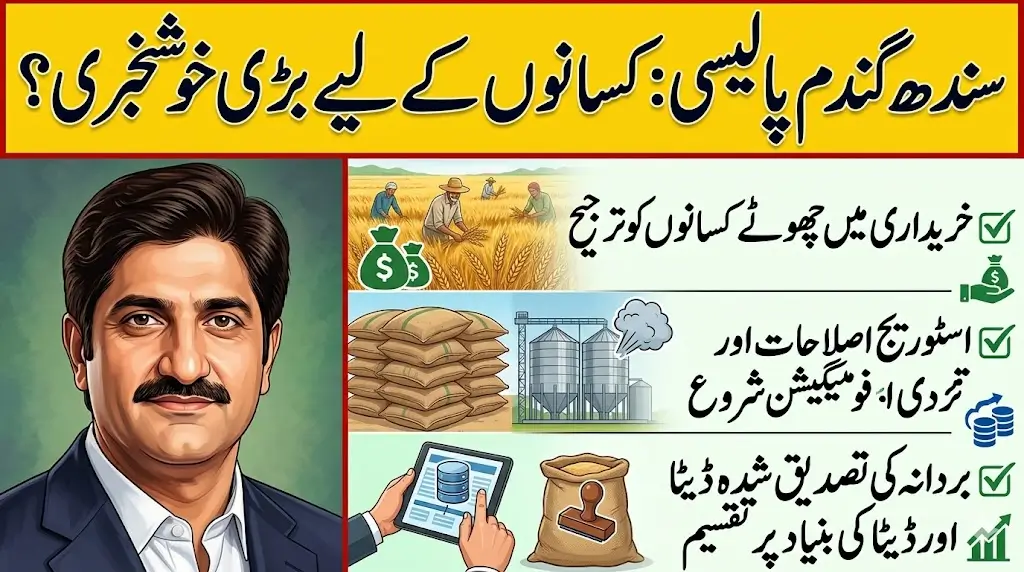
The Sindh Wheat Procurement Policy has taken a strong step forward as Syed Murad Ali Shah issued important directives to improve wheat procurement, storage, and farmer support. These measures aim to strengthen food security in Sindh while ensuring that small farmers receive fair opportunities and benefits.
The policy highlights transparency, efficiency, and farmer-focused reforms, making it a significant development for the agricultural sector of the province.
Immediate Fumigation and Storage Measures
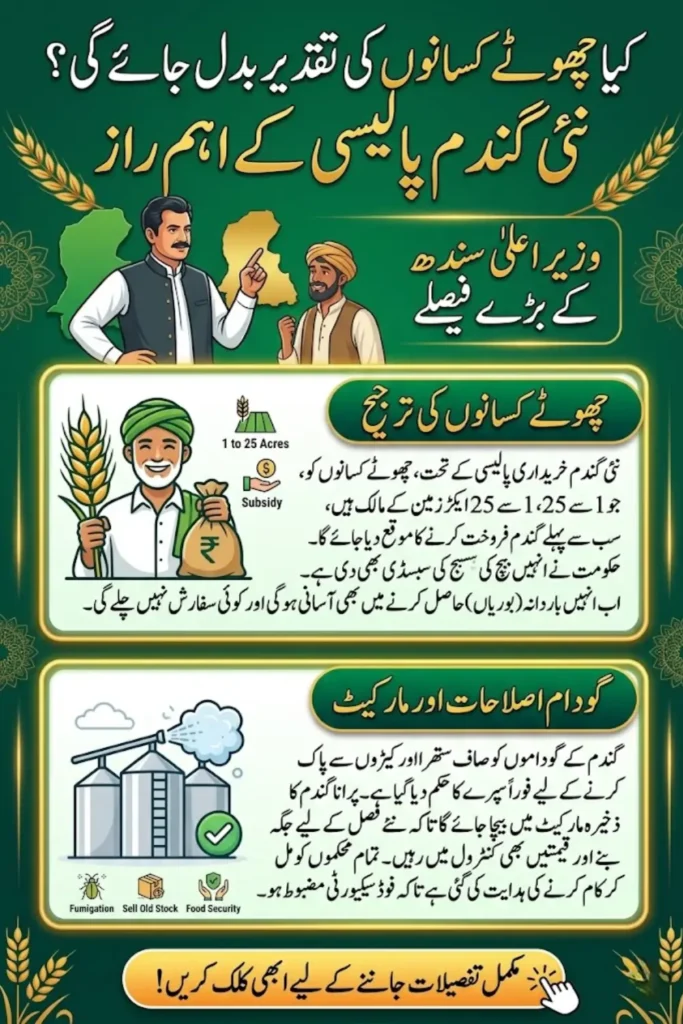
A key part of the Sindh Wheat Procurement Policy is the proper maintenance of wheat storage facilities. The Chief Minister directed the Sindh Food Department to immediately begin fumigation of warehouses.
This step is essential to protect stored wheat from pests and spoilage. Clean and hygienic storage ensures that the grain remains safe for consumption and reduces post-harvest losses, which is a major issue in many regions.
Disposal of Existing Wheat Stock
During the meeting, it was revealed that over 1.3 million tonnes of wheat stock was available until July 2025. Most of this stock has already been released into the market, but a small quantity still remains.
Under the Sindh Wheat Procurement Policy, the Chief Minister ordered the immediate sale of the remaining stock. This decision serves two important purposes:
- It helps stabilize wheat prices in the market
- It creates space in storage facilities for the upcoming wheat crop
This timely action ensures that the procurement process for the new crop can begin smoothly.
Also read: PSL 11 Schedule Confirmed Amid Regional Tensions: Matches to Be Held Without Spectators
Focus on Small Farmers in Wheat Procurement
One of the most important aspects of the Sindh Wheat Procurement Policy is its strong focus on small farmers. The government has provided seed subsidies to around 1.3 million farmers who own between 1 to 25 acres of land.
The Chief Minister emphasized that these farmers should be given priority during wheat procurement. The Sindh Agriculture Department maintains detailed data of these farmers, making it easier to implement a fair system.
By supporting small farmers, the government aims to reduce inequality and boost agricultural productivity at the grassroots level.
Transparent Distribution of Bardana (Sacks)
Bardana (wheat sacks) plays a crucial role in the procurement process. Without proper distribution, small farmers often face difficulties in selling their produce.
Under the Sindh Wheat Procurement Policy, strict instructions have been given to distribute bardana based only on verified farmer data. This ensures:
- Fair access for small farmers
- Prevention of misuse or favoritism
- A transparent procurement system
This step is expected to improve trust between farmers and the government.
Also read: Study in Sweden 2026: Fully Funded Scholarships for Pakistani Students Explained
Coordination Between Departments
Effective implementation of the Sindh Wheat Procurement Policy requires strong coordination between departments. The meeting included key officials such as Makhdoom Mehboob-uz-Zaman and senior officers from both the Food and Agriculture departments.
The Chief Minister stressed the importance of teamwork and directed both departments to work closely together. This collaboration is necessary to ensure smooth procurement, proper storage, and efficient management of wheat reserves.
Development of a Transparent Procurement Policy
Another major decision was to develop a clear and transparent procurement policy. The Sindh Wheat Procurement Policy will include guidelines for:
- Fair distribution of bardana
- Efficient wheat procurement processes
- Proper management of existing and new wheat stocks
A well-defined policy will help eliminate confusion, reduce corruption, and ensure that all stakeholders benefit equally.
Also read: Balochistan Educational Institutions Holidays Extension Until March 31 Amid Energy Crisis
Impact on Market Stability and Food Security
The Sindh Wheat Procurement Policy is expected to have a positive impact on both the market and food security. By releasing old stock and preparing for new procurement, the government aims to maintain stable wheat prices.
At the same time, better storage and fair procurement practices will strengthen the province’s food security system. Supporting small farmers also ensures long-term sustainability in agricultural production.