

Prime Minister’s Austerity Fund
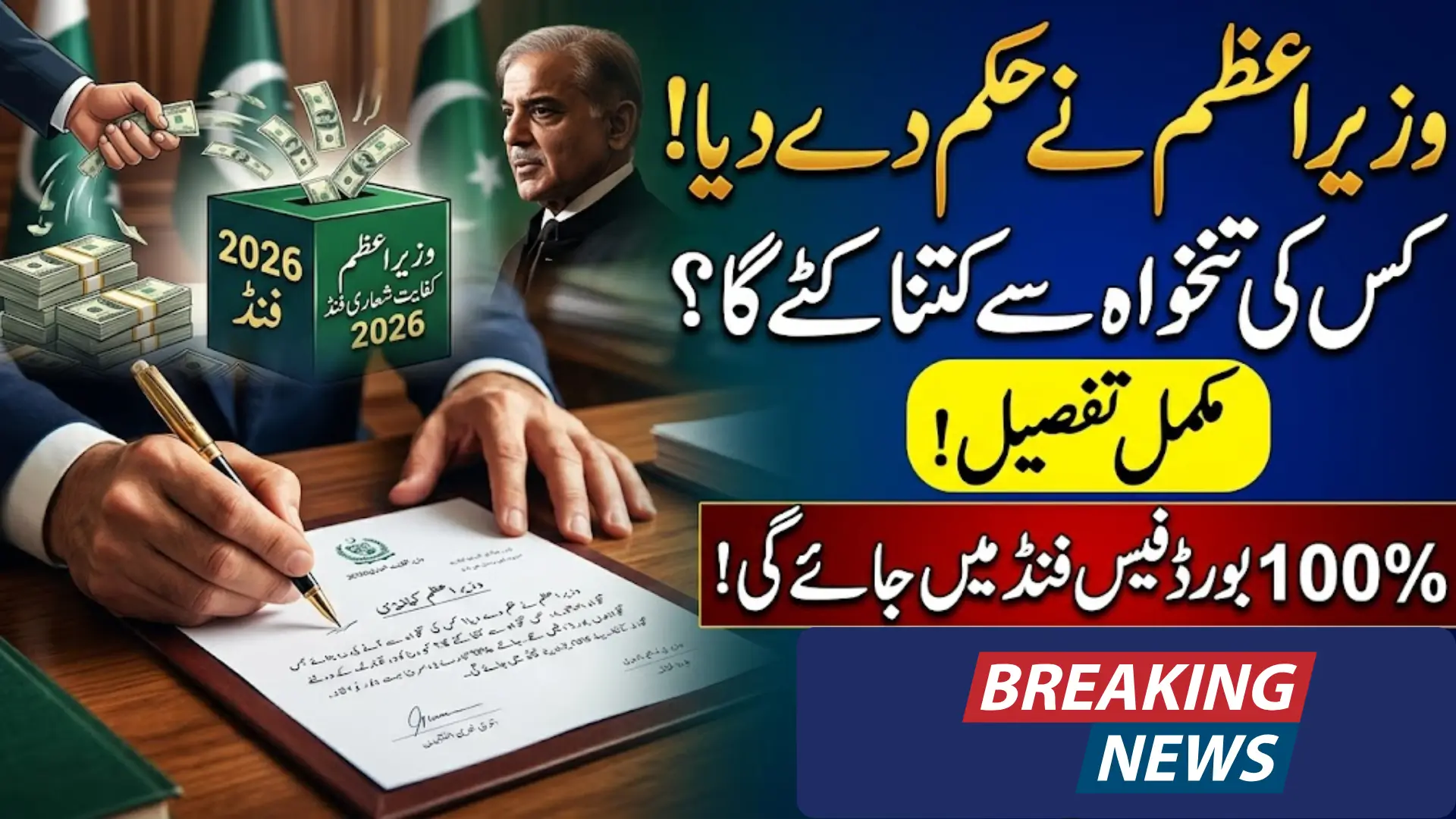
The government has introduced new austerity measures aimed at promoting financial discipline and reducing unnecessary expenses within public institutions. The Prime Minister has approved further steps based on the recommendations of the Committee Monitoring Fuel Saving and Austerity Measures.
These measures focus on temporary salary deductions from senior officials and the collection of board meeting fees from government representatives. The collected amount will be deposited into the Prime Minister’s Austerity Fund 2026, which has been created to support national financial stability and promote responsible use of public resources.
The initiative reflects the government’s effort to ensure that senior officials contribute directly to austerity and cost-saving policies.
Salary Deduction Policy for Senior Officers
Under the new policy, salary deductions will apply to senior officers working in government departments, semi-government organizations, regulatory institutions, and public sector companies.
The deduction will be taken from the gross salary of these officers. However, the policy is temporary and will only remain in effect for two months.
The funds collected through these deductions will be transferred directly to the Prime Minister’s Austerity Fund 2026. This step is part of a broader plan to strengthen austerity measures and encourage responsible financial management in public institutions.
Salary Deduction Structure
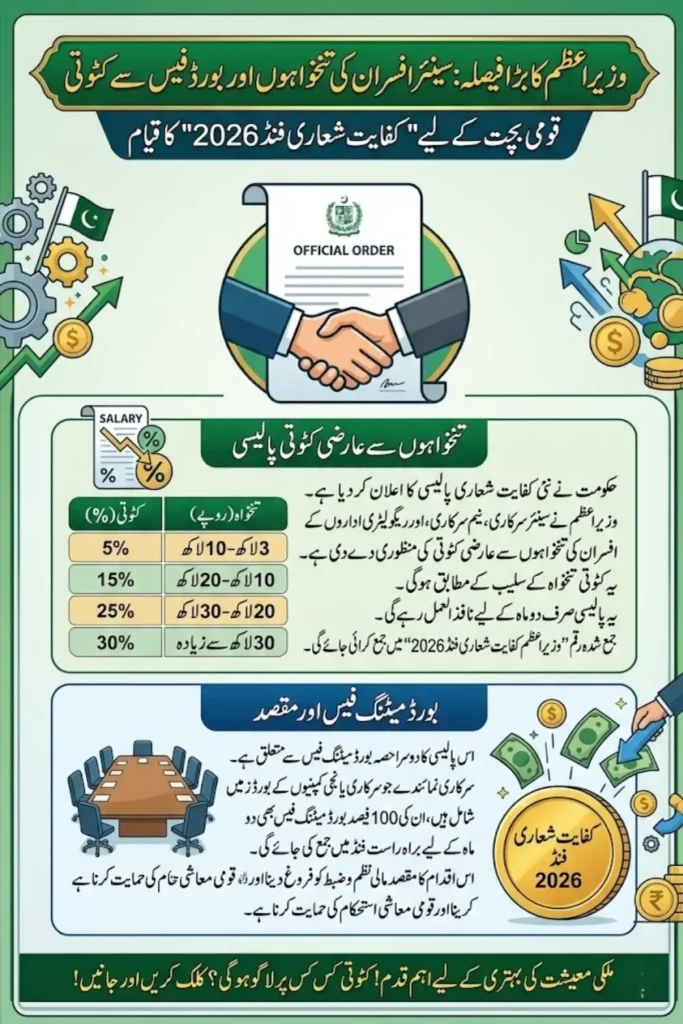
The deduction percentage depends on the salary range of the officer. Higher salaries will face higher deduction rates. The structure is designed to ensure fairness while maximizing contributions to the Prime Minister’s Austerity Fund 2026.
The deduction structure is as follows:
1. Salary from Rs 300,000 to Rs 1,000,000
A deduction of 5% will be applied for two months.
2. Salary from Rs 1,000,000 to Rs 2,000,000
Officers in this category will face a 15% deduction for two months.
3. Salary from Rs 2,000,000 to Rs 3,000,000
A deduction of 25% will be applied for the same period.
4. Salary above Rs 3,000,000
Senior officials earning above this amount will contribute 30% of their salary for two months.
All deducted amounts will be deposited directly into the Prime Minister’s Austerity Fund 2026 to support government austerity efforts.
Board Meeting Fees of Government Representatives
Another important part of the new policy relates to board meeting fees received by government-nominated members.
Many government officials serve on the boards of directors of government companies and autonomous bodies. According to the new decision, 100% of the board meeting fees received by these government representatives will be deposited into the Prime Minister’s Austerity Fund 2026.
This rule will also apply for a two-month period. Instead of being paid to the representatives personally, the entire amount will go directly to the fund.
This measure ensures that additional earnings from board memberships also contribute to national austerity efforts.
Fees of Government Representatives on Private Company Boards
The policy does not apply only to government organizations. It also includes government representatives who serve on the boards of private companies.
Under the new instructions, 100% of the board fees earned by government representatives from private companies will also be deposited into the Prime Minister’s Austerity Fund 2026.
Like the other measures, this rule will remain effective for two months. The goal is to ensure that all financial benefits received by government representatives during this period support the national austerity initiative.
Objective of the Austerity Measures
The main objective of these measures is to promote financial discipline across government institutions. By implementing salary deductions and redirecting board meeting fees, the government aims to reduce unnecessary financial benefits and encourage responsible spending.
The Prime Minister’s Austerity Fund 2026 will serve as a central pool for these contributions. Funds collected through these measures are expected to support government initiatives related to economic stability and efficient resource management.
These steps also demonstrate a commitment from senior officials to participate in national cost-saving efforts.