


Expected Surge in Petrol and Diesel Prices in Pakistan
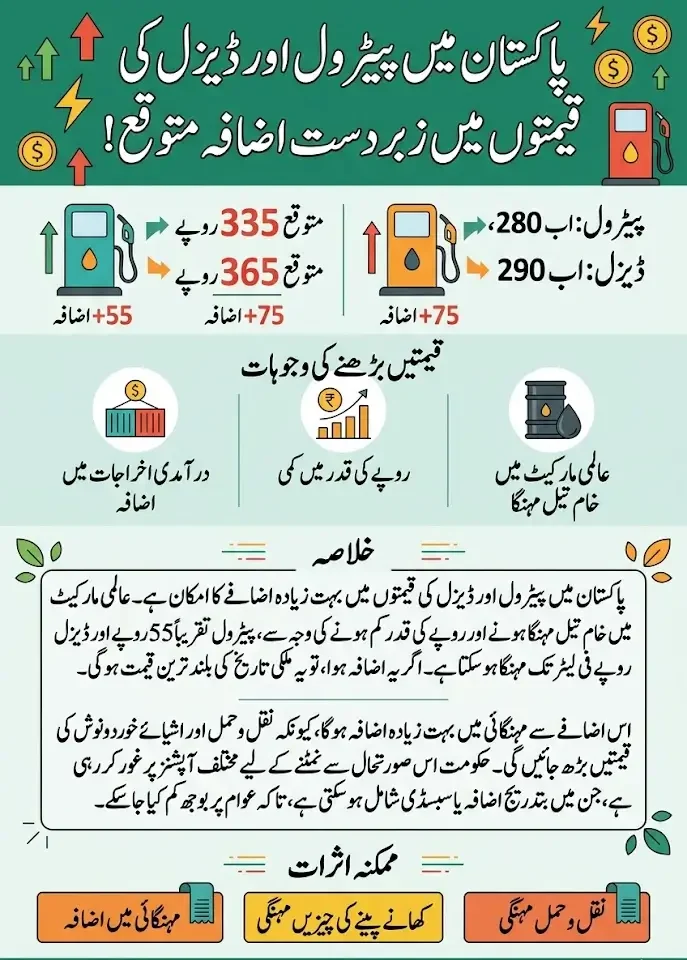
Pakistan is facing the possibility of a major increase in petroleum prices due to rising crude oil rates in the global market. According to early estimates, petrol prices may increase by around Rs 55 per liter, while high-speed diesel could go up by Rs 75 per liter. If implemented, this would push fuel prices to their highest level in the country’s history.
This expected increase has raised concerns among citizens, businesses, and policymakers. While the final decision is yet to be announced, discussions are ongoing about whether the increase should be implemented fully, gradually, or managed through government subsidies.
Reasons Behind the Expected Price Increase
The anticipated rise in fuel prices is mainly linked to international market trends and domestic economic conditions. Pakistan relies heavily on imported fuel, making it vulnerable to fluctuations in global crude oil prices and currency exchange rates.
Several key factors are contributing to the expected increase:
- Rising global crude oil prices
- Depreciation of the Pakistani rupee against the US dollar
- Increased import costs
- Limited fiscal space for subsidies
- Pressure from international financial institutions
These elements combine to create a situation where maintaining current fuel prices becomes difficult without significant financial strain on the government.
Also read: Sindh High Court Stops Salary Deductions from Teachers in Time Scale Benefits Case
Estimated Price Comparison
The expected increase would significantly change current fuel rates. The following table provides an estimated overview of current and projected fuel prices for better understanding.
| Fuel Type | Current Price (Approx.) | Expected Increase | Estimated New Price |
|---|---|---|---|
| Petrol | Rs 280/liter | Rs 55 | Rs 335/liter |
| High-Speed Diesel | Rs 290/liter | Rs 75 | Rs 365/liter |
These figures are estimates and may change depending on final approval and policy decisions. However, they give a clear idea of the potential financial impact on consumers.
Government Options Under Consideration
The government has multiple options to manage the situation, each with its own advantages and challenges. The final approach will depend on economic conditions and political considerations.
Possible strategies include:
- Implementing the full increase immediately
- Introducing the increase in phases over time
- Providing subsidies to maintain current prices
- Combining partial increases with limited subsidies
Each option carries trade-offs. A full increase may stabilize government finances but increase public burden, while subsidies can reduce immediate pressure but strain the national budget.
Impact on Economy and Daily Life
A significant rise in fuel prices directly affects transportation, production, and overall inflation. Higher fuel costs increase the price of goods and services, making daily life more expensive for citizens.
Also read: Lahore High Court Dowry Payment Decision: Husband Bound to Pay Dowry on Wife’s Demand
Highlights key areas likely to be affected:
| Sector | Expected Impact |
|---|---|
| Transportation | Higher fares and logistics costs |
| Food Prices | Increase due to higher transport costs |
| Electricity | Possible rise in generation costs |
| Businesses | Increased operational expenses |
These effects can spread across the economy, leading to broader inflationary pressure and reduced purchasing power for households.
Possible Relief Measures
To ease the burden on the public, the government may introduce relief measures alongside any price increase. These measures aim to balance economic stability with public affordability.
Potential relief options include:
- Targeted subsidies for low-income groups
- Reduction in petroleum levy or taxes
- Support for public transport systems
- Temporary financial assistance programs
Such steps can help reduce the immediate impact, but they require careful financial planning to avoid long-term economic challenges.
Also read: Sharp Rise in Gold and Silver Prices: Latest Updates on Local and Global Markets