

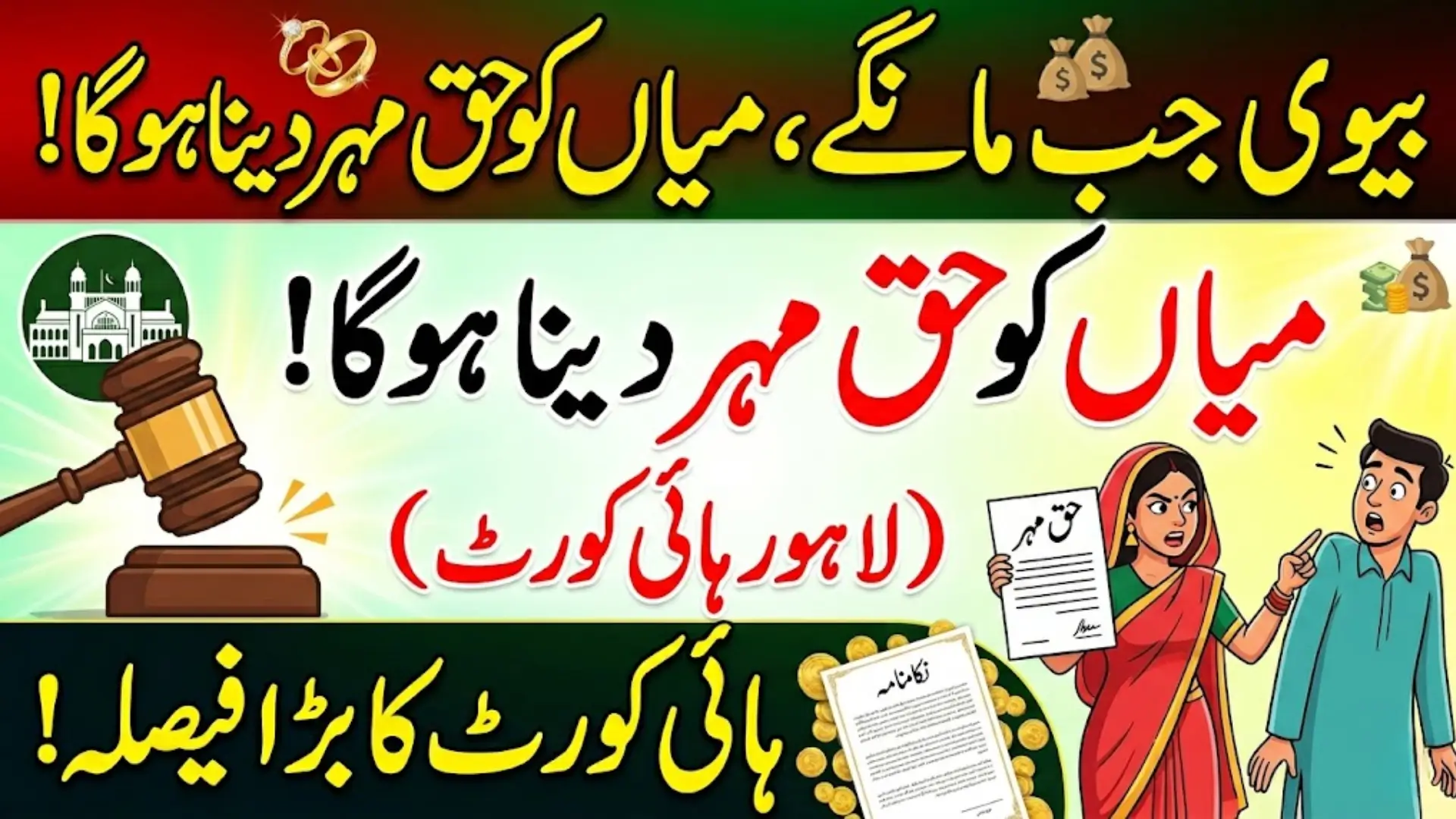
Lahore High Court Dowry Payment Decision
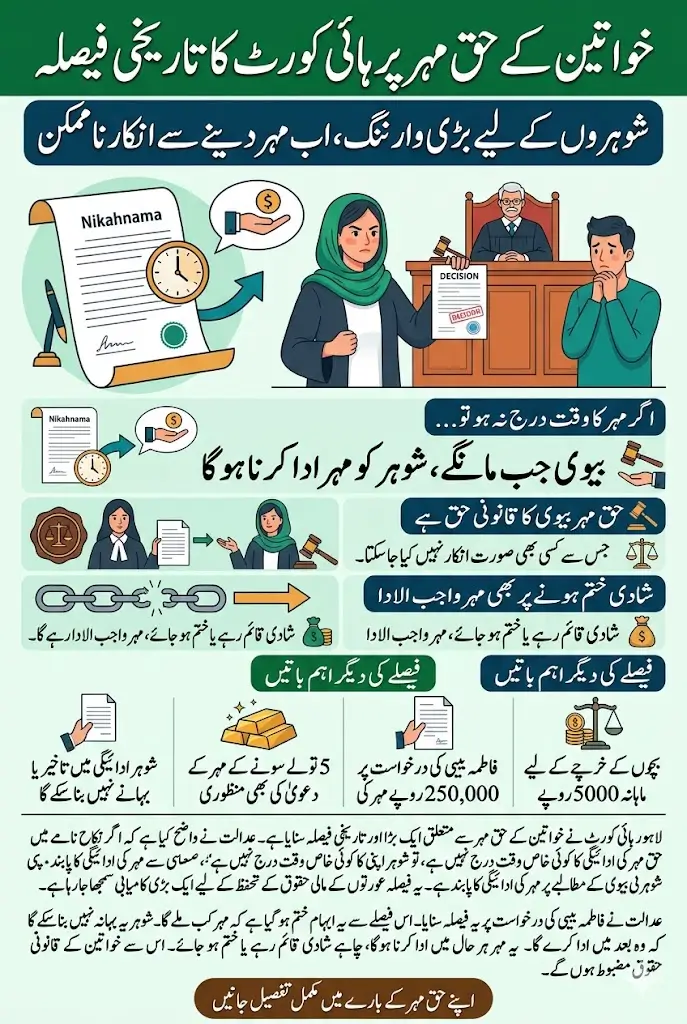
The Lahore High Court dowry payment decision has brought an important clarification regarding women’s financial rights in marriage. In a significant ruling, the court declared that if the time for payment of dowry is not mentioned in the marriage certificate, the husband is legally bound to pay the dowry whenever the wife demands it. This decision is being seen as a major step toward protecting the rights of women in Pakistan.
Background of the Case
The case was filed by Fatima Bibi, who approached the court to recover her rights from her husband. She claimed non-payment of maintenance (non-naqfa), dowry, and 5 tola gold that was promised at the time of marriage.
Initially, the family court heard the case and gave a partial decision. The court ordered the husband to pay a monthly maintenance amount of Rs. 5,000 and also recognised the dowry claim. However, the claim regarding the gold dowry was rejected.
Family Court and Trial Court Decisions
After the family court’s ruling, the case went to the trial (appellate) court. The trial court upheld the monthly maintenance but changed the dowry compensation. The court directed the husband to make a payment of Rs. 250,000 in place of the dowry.
Despite this, the trial court dismissed the claim related to gold dowry. This created dissatisfaction for the petitioner, who believed her legal rights were not fully protected.
Also read: Sindh Wheat Procurement Policy: CM Syed Murad Ali Shah Prioritizes Small Farmers and Storage Reforms
Appeal in the Lahore High Court
Unhappy with the appellate court’s decision, Fatima Bibi challenged the ruling in the Lahore High Court. She argued that the decision regarding dowry was incorrect and violated her rights.
The case was heard by Justice Abid Hussain Chatha, who carefully reviewed the facts and legal aspects before issuing a detailed 6-page written judgment.
Key Findings of the Court
The Lahore High Court dowry payment decision clearly explained the legal position regarding dowry:
- If the timing of dowry payment is not mentioned in the marriage contract (nikahnama), the husband must pay it whenever the wife demands it.
- Dowry is a legal right of the wife, and it cannot be denied without a valid reason.
- The obligation to pay dowry exists regardless of whether the marriage is still intact or has ended.
This clarification removes confusion about when dowry becomes payable and strengthens the legal standing of women.
Also read: Rising Fuel Prices Drive Demand for Plug-in Hybrid and Range-Extended Vehicles in Pakistan
Final Verdict
The Lahore High Court partially accepted the petition filed by Fatima Bibi. The court declared the appellate court’s decision on the dowry issue invalid.
At the same time, the court restored the original decision of the family court regarding dowry. By doing so, it upheld the wife’s right to receive dowry according to the law.
Legal Significance of the Decision
This Lahore High Court dowry payment decision carries great importance for family law in Pakistan:
- It reinforces women’s financial rights within marriage
- It removes ambiguity about dowry payment timelines
- It sets a clear legal precedent for future cases
- It ensures that husbands cannot delay or avoid dowry obligations
The ruling also sends a strong message that women’s rights granted at the time of marriage must be respected and fulfilled.
Also read: Sindh High Court Stops Salary Deductions from Teachers in Time Scale Benefits Case