
Major Changes in National Identity Card
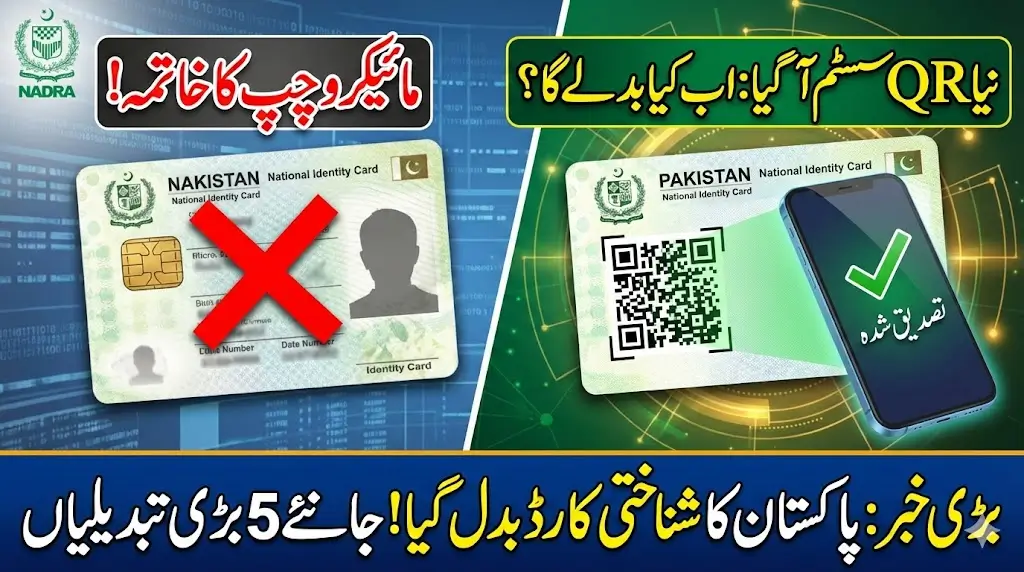
Major Changes in National Identity Card: Pakistan’s National Database and Registration Authority (National Database and Registration Authority) has recently introduced major changes in the National Identity Card. The most notable updates include the removal of the microchip and the introduction of a QR code with full legal status. These updates aim to make the National Identity Card more secure, reliable, and easier to use for citizens across Pakistan.
1. Introduction to Major Changes in National Identity Card
The National Identity Card is one of the most important documents for Pakistani citizens. It serves as proof of identity and is widely used for voting, banking, travel, and other official services. With rapid technological advancements, NADRA has taken steps to modernize the card. The focus of these updates is to enhance security while making verification faster and more convenient for the public.
2. Removal of Microchip from National Identity Card
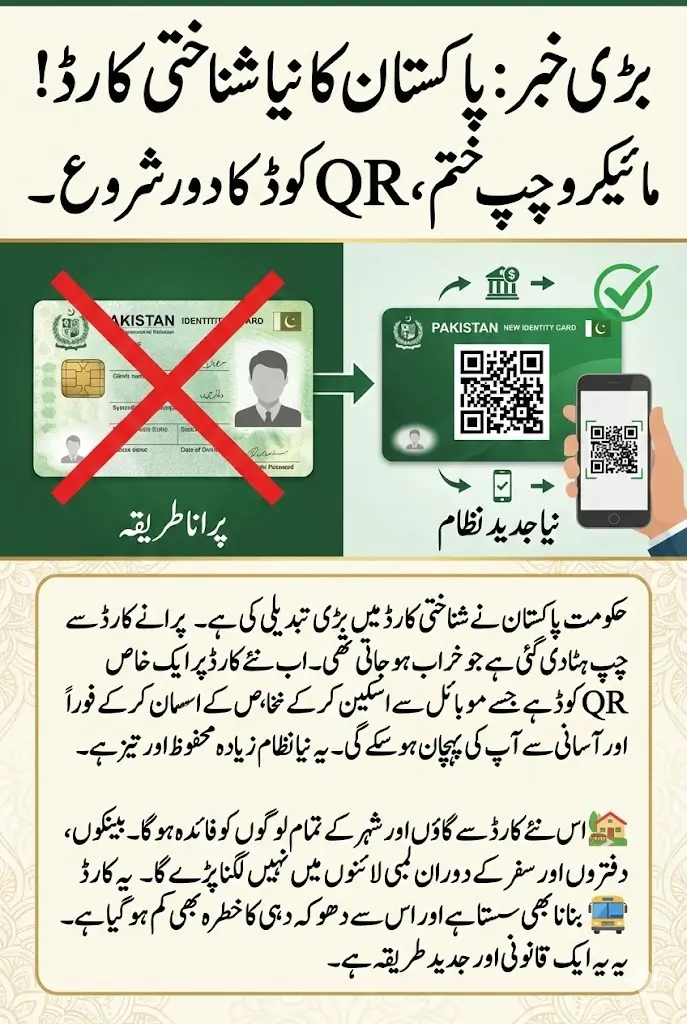
One of the biggest changes in the National Identity Card is the removal of the microchip. Previously, microchips were embedded to store personal information, but they increased the cost of production and sometimes caused technical issues during verification.
The new cards are designed without a microchip, making them simpler, more durable, and easier to handle. Citizens will now benefit from a more cost-effective identity card without compromising on security or reliability.
3. QR Code Given Legal Status
Another major update is the legal recognition of the QR code on the National Identity Card. NADRA has officially given QR codes legal status as a security and authentication feature. This means that any QR-based verification will now be considered legally valid for identification purposes.
QR codes act as a digital representation of the cardholder’s information, allowing authorities and institutions to authenticate identity quickly and efficiently.
4. QR-Based Authentication System
The introduction of QR codes enables instant authentication both online and offline.
- Offline Verification: Scanning the QR code allows authorities to confirm identity even without an internet connection, making it practical for remote areas.
- Online Verification: Online systems can verify the card instantly, saving time in banks, government offices, and other institutions.
This system significantly reduces the chances of identity fraud and streamlines verification processes nationwide.
Also read: CM Punjab E-Taxi Service Introduces for Public Convenience
5. Security and Authentication Enhancements
Despite removing the microchip, the new National Identity Card ensures improved security. QR codes are encrypted and designed to prevent unauthorized access to personal data. With these updates, NADRA aims to provide a secure, reliable, and user-friendly identity verification system for all citizens.
6. Public Benefits of Major Changes in National Identity Card
The new QR-based identity card offers numerous benefits for citizens:
- Faster and more convenient verification.
- Simplified access to government and financial services.
- Improved security against fraud and identity theft.
- Cost-effective and easier to produce for NADRA.
These changes make the National Identity Card more practical and efficient for everyday use.
Also read: Over 422K Youth Join PM’s Digital Youth Hub 2026 – Registrations and Rising
7. Conclusion
In summary, the major changes in the National Identity Card by NADRA reflect a significant step forward in Pakistan’s identity management system. Removing the microchip, introducing legally recognized QR codes, and enabling instant authentication make the card more secure, convenient, and reliable.
This modernization will benefit both citizens and institutions, ensuring smoother, faster, and safer identity verification across the country. NADRA’s initiative sets the stage for a more efficient digital identity system in Pakistan’s future.