

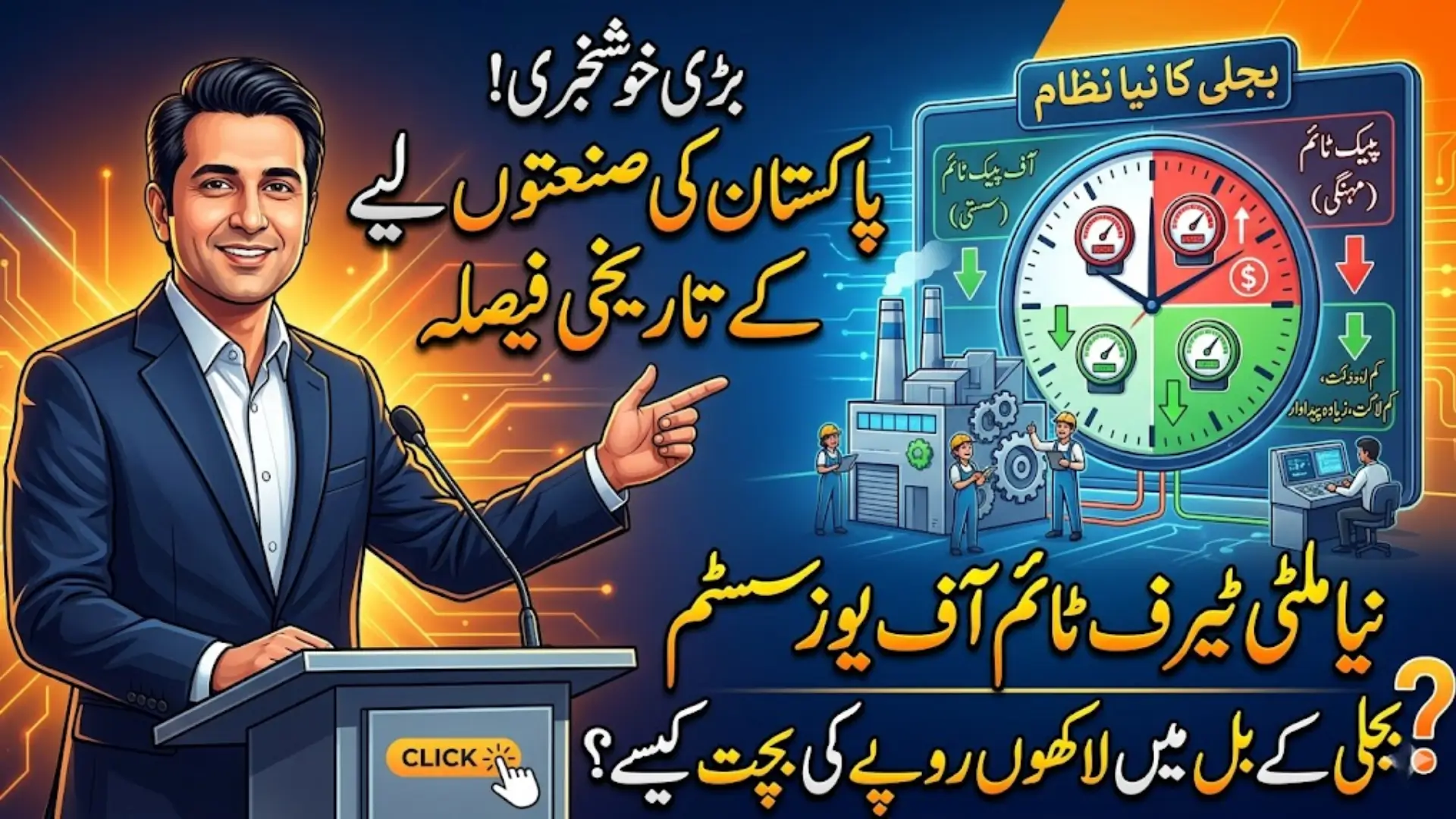
Multi-Tariff Time-of-Use System
The government of Pakistan is taking significant steps to improve electricity management for the industrial sector by preparing to introduce a multi-tariff time-of-use system. This new initiative by the Ministry of Energy (Power Division) aims to make energy consumption more efficient, cost-effective, and aligned with actual electricity costs.
Understanding the Multi-Tariff Time-of-Use System
The proposed multi-tariff time-of-use system is designed to allow industrial consumers to pay electricity charges based on the time of usage. Unlike traditional flat-rate electricity bills, this system will reflect the actual cost of electricity at different hours of the day.
By introducing this option, the government hopes to encourage industries to shift electricity usage to lower-cost hours, thereby reducing overall energy expenses and improving grid stability.
Leadership and Policy Direction
The initiative is being advanced under the special direction of Sardar Owais Ahmed Khan Leghari. Several internal consultative and technical meetings have already been held to explore the framework, ensuring it is practical and beneficial for industrial stakeholders.
The involvement of top leadership underscores the government’s commitment to modernizing energy management in the industrial sector.
Also read: Syed Murad Ali Shah Announces 90-Day Special Remission in Prisoners’ Sentences on Eid
Structure of the Proposed System
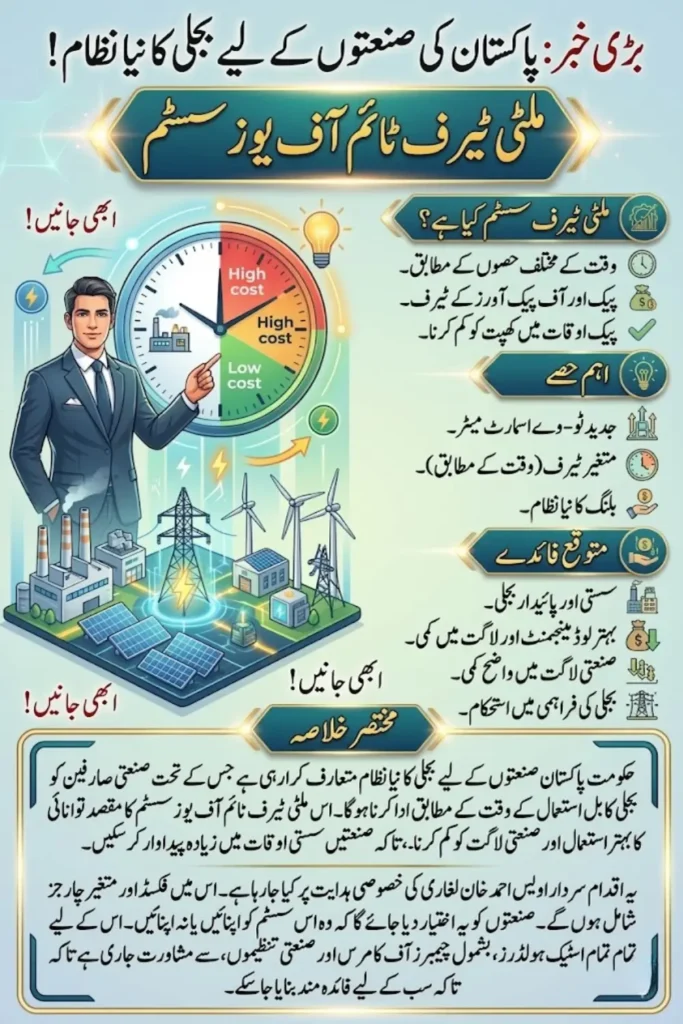
Under the proposed framework, industrial consumers will have the choice to opt into a multi-slab tariff structure. This system will:
- Calculate electricity charges based on the average cost at different times of the day
- Provide an accurate reflection of electricity supply and demand
- Give industries more control over their energy expenses
This approach is expected to make electricity usage more transparent and cost-efficient for businesses.
Key Components of the Tariff System
The multi-tariff time-of-use system will have two main components:
- Fixed Charges: These charges will be determined based on the maximum demand of the industry.
- Variable Energy Charges: These will be calculated according to the actual energy cost at the time of consumption.
This combination of fixed and variable charges ensures that consumers are paying fairly for both capacity and energy usage while encouraging smarter electricity consumption.
Also read: Sindh Austerity Measures Fuel Energy Crisis: Government Announces Salary Cut and Preventive Steps
Expected Benefits for Industries and the Grid
The new system is expected to provide multiple advantages:
- Encourage industries to use electricity during low-cost hours
- Improve load management and reduce stress on the national grid
- Decrease the need for expensive power generation during peak times
- Support industrial competitiveness by lowering overall energy costs
By optimizing electricity use, industries can operate more efficiently while the power system becomes more stable and reliable.
Stakeholder Consultation
Before finalizing the system, the federal minister has directed that all relevant stakeholders be consulted. This includes industrial consumers, chambers of commerce, and trade organizations.
The first consultative meeting on this topic will be held online on March 26, ensuring that the concerns and suggestions of all stakeholders are carefully considered.