
BISP Cash Transfers and Rising IPV Risks
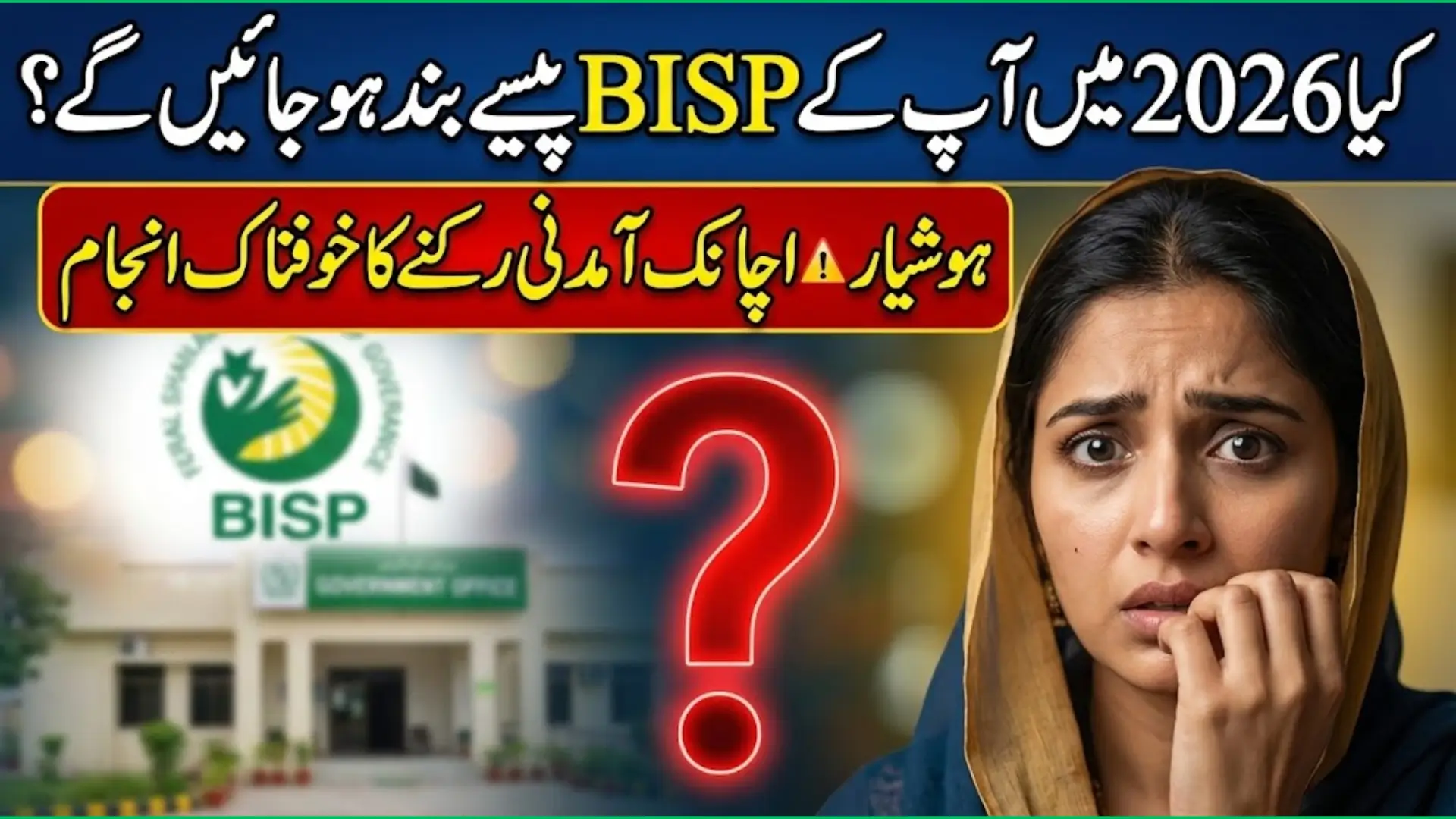
The Benazir Income Support Programme (BISP) is Pakistan’s largest social protection initiative, providing unconditional cash transfers to low-income women. Over the years, these transfers have not only reduced poverty but also strengthened women’s financial independence and household decision-making. In 2026, however, the programme is undergoing significant changes due to updated NSER re-verification, raising concerns about the potential rise in Intimate Partner Violence (IPV) within households.
Research shows that financial stability can directly influence household relationships. When women have regular access to cash, they experience greater bargaining power, reduced stress, and improved emotional well-being. Losing this support suddenly can create economic and emotional tensions that may increase IPV risks.
What Is BISP and Why It Matters in 2026
BISP is designed to act as a safety net for vulnerable women, aiming to alleviate poverty and improve household well-being. Key objectives include reducing food insecurity, supporting children’s education through Taleemi Wazaif, and providing a buffer against economic shocks. By giving women direct access to funds, BISP enhances their autonomy and encourages better household planning.
In 2026, BISP is undergoing a critical transition due to the NSER re-verification process. This update ensures that benefits reach those most in need, but it also introduces uncertainty for families who previously relied on consistent cash transfers. The change emphasizes the importance of understanding both the financial and social implications of cash support programs.
Understanding IPV in the Context of Economic Stability
Intimate Partner Violence (IPV) refers to physical, emotional, psychological, or economic abuse within a relationship. Research globally, including studies by the World Bank and UN Women, indicates that household economic conditions play a key role in shaping family dynamics and conflict. Financial stress often triggers arguments, which can escalate into abusive behavior.
Funded IsDB Scholarship 2026–2027: Guide for Bachelor, Master, PhD, and Postdoctoral Opportunities
BISP cash transfers influence these dynamics by reducing dependency and promoting financial independence for women. When women control household funds, disputes over expenses decrease, and both partners experience reduced tension. In this way, BISP acts as more than a welfare program—it becomes a tool for violence prevention within vulnerable households.
The Safety Net Effect of BISP Cash Transfers
BISP provides protection against domestic violence through three primary pathways. First, consistent cash reduces economic stress by covering essential expenses such as food, healthcare, and education. Households with fewer financial disputes experience lower levels of tension, creating a safer environment for women and children.
Second, direct transfers increase women’s bargaining power. Women with access to cash can make decisions regarding household spending, health, and education, reducing complete dependence on their partners. Third, improved financial security enhances emotional well-being. Men often experience less strain when household expenses are managed, lowering the risk of aggressive behavior.
Risks of Sudden Discontinuation
Sudden removal from BISP can create several risks for households. These include:
- Extractive violence, where partners blame women for “lost” income
- Loss of financial autonomy and control over personal expenses
- Income shocks leading to a return of poverty-related stress
- Negative impacts on child welfare, such as reduced education and nutrition
| Risk Factor | Household Impact |
|---|---|
| Extractive Violence | Emotional or physical abuse due to perceived loss of income |
| Loss of Financial Autonomy | Reduced ability for women to manage household decisions |
| Income Shock | Increased financial stress and conflicts |
| Child Welfare Decline | Reduced school attendance and nutrition |
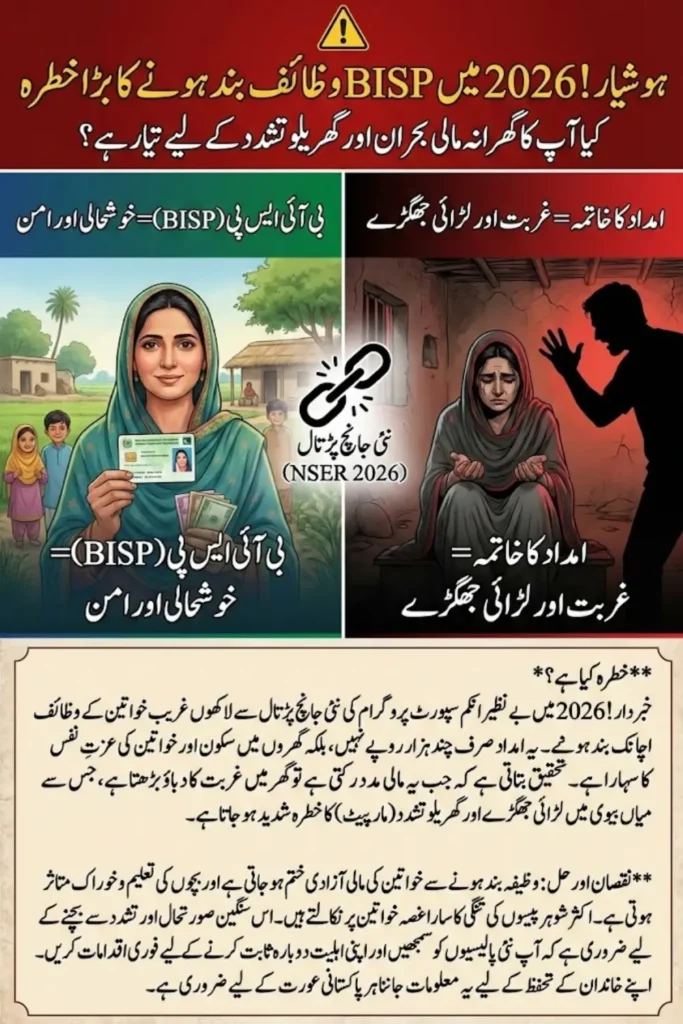
One of the most critical threats is extractive violence, which occurs when partners mistakenly assume payments will continue and pressure women, escalating into abuse. This risk highlights the importance of clear communication regarding program changes.
Impact on Women’s Financial Independence and Children
Without BISP support, women may lose access to emergency savings, transport money, and healthcare funds. This financial dependency can limit their ability to negotiate household decisions or seek help in abusive situations. Over time, this undermines the gains in autonomy and confidence previously achieved through cash transfers.
Children are also affected when BISP support is reduced. Lower participation in Taleemi Wazaif, irregular school attendance, and poor nutrition can result in long-term developmental challenges. Additionally, increased household arguments over finances indirectly heighten IPV risks, creating a cycle that affects both women and children.
How To Get Accurate Information About BISP
Government Response and Protection Measures
The Domestic Violence Bill 2025 addresses economic abuse by criminalizing actions such as restricting access to money or forcing financial dependence. The law also strengthens protection orders, offering women legal recourse against abuse, with penalties up to three years in prison.
BISP has introduced re-verification and appeals mechanisms. Women can visit Appraisal Centers for reassessment if they are removed from the program. These measures aim to minimize household tensions and reduce the likelihood of IPV by providing clear avenues for support and recourse.
Practical Steps for Women Removed from BISP
Women who lose access to BISP cash transfers can take several steps to protect themselves and their families:
- Visit the nearest BISP Tehsil Office for information
- File an appeal at an Appraisal Center for PMT reassessment
- Keep CNIC and household records ready for verification
- Seek legal aid if experiencing domestic abuse
| Step | Purpose |
|---|---|
| Visit Tehsil Office | Obtain updated information on eligibility and appeals |
| File Appeal | Request reassessment of benefits |
| Keep Records Ready | Ensure smooth verification process |
| Seek Legal Aid | Protect against potential IPV or economic abuse |
FAQs
Does BISP cash transfer reduce domestic violence?
Yes, consistent cash support lowers financial stress and improves women’s bargaining power, reducing IPV risks.
Why are women removed from BISP?
Women are removed based on updated NSER PMT scores, which indicate changes in household economic conditions.
Can women appeal BISP removal?
Yes, BISP allows appeals through Appraisal Centers and reassessment processes.
What is economic abuse under Domestic Violence Bill 2025?
It includes restricting access to money, forcing dependence, or punishing women for financial losses.
Suzuki Cultus 2026 AGS vs VXR vs VXL Price and Feature Check Now