
BISP Nashonuma Dashboard
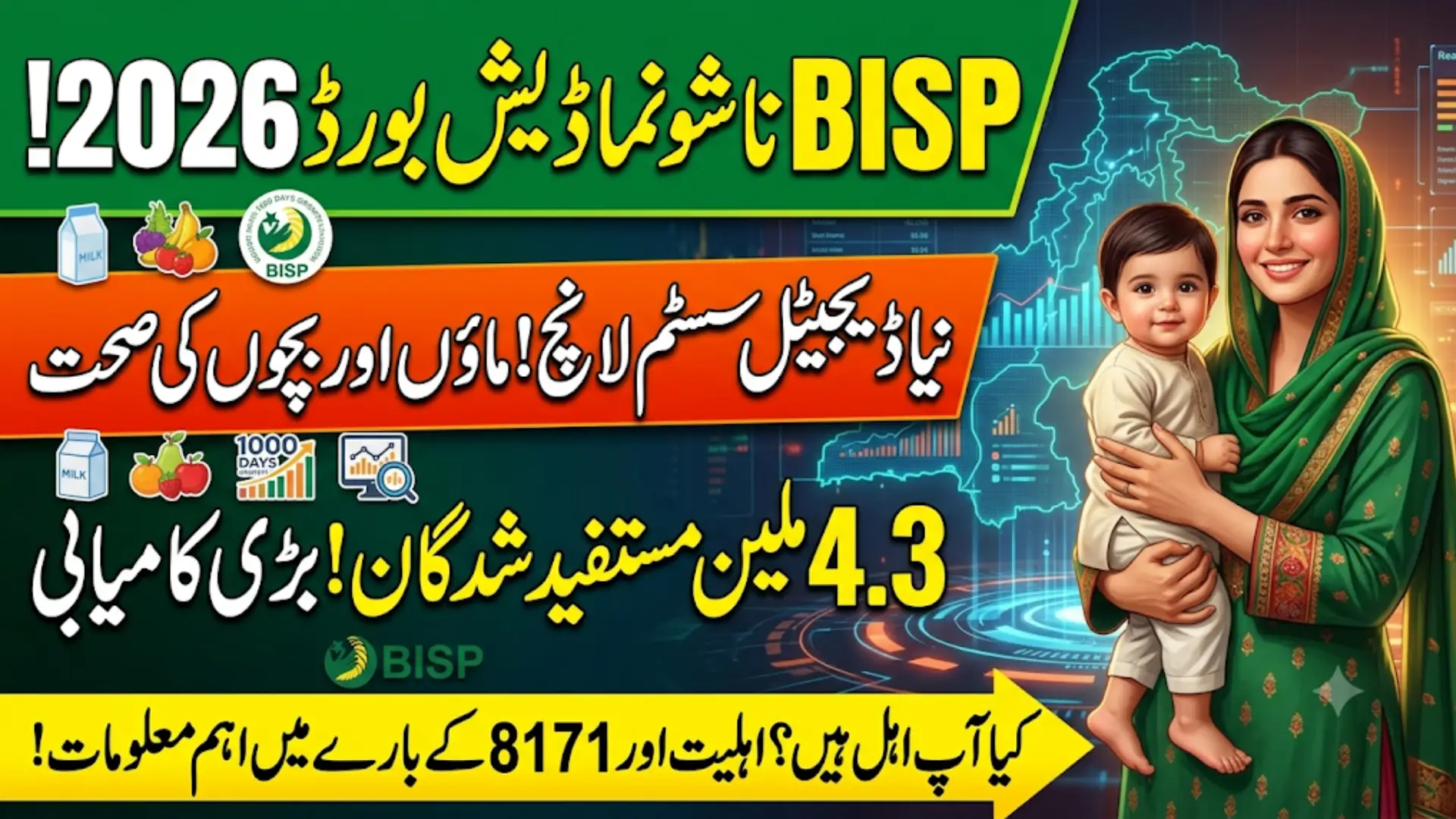
The Benazir Income Support Programme (BISP) has taken a major digital step by launching a real-time dashboard for its Benazir Nashonuma Programme. This new system is designed to track child and mother nutrition data across Pakistan more efficiently, helping the government make faster and more accurate decisions related to health and social protection.
For families already benefiting from the 8171 Ehsaas Program, this update is important because Nashonuma works closely with BISP’s core welfare network, focusing especially on the health of mothers and children in low-income households.
What Is the Benazir Nashonuma Programme?
The Benazir Nashonuma Programme is a nutrition support initiative under BISP that provides financial and health assistance to pregnant women, breastfeeding mothers, and children during their first 1,000 days of life a critical period for physical and mental growth. The program aims to reduce stunting, low birth weight, and malnutrition among children from deserving families.
Launch of the Real-Time Digital Dashboard
The new dashboard was formally inaugurated by BISP Chairperson Senator Rubina Khalid, along with Federal Minister for Poverty Alleviation and Social Safety Syed Imran Ahmed Shah, WFP Country Director Coco Ushiyama, and several senior officials and development partners.
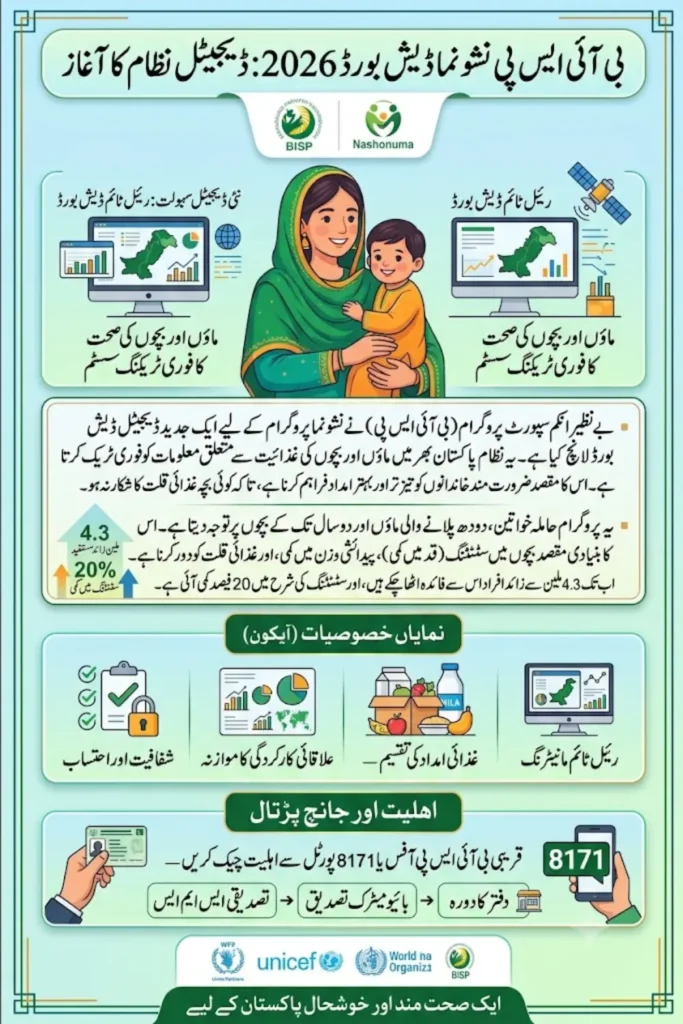
This digital tool gives BISP the ability to monitor Nashonuma centres across the country in real time. Instead of waiting for manual reports, officials can now track:
- Number of registered mothers and children
- Nutrition support delivery status at each centre
- Regional performance comparisons
- Gaps in service delivery that need urgent attention
This shift from manual to real-time monitoring is expected to make the entire nutrition support system more transparent and accountable.
National Youth Employment Policy: A New Roadmap for Pakistan’s Working-Age Generation
Why This Update Matters for Families
Senator Rubina Khalid explained that the programme’s real strength lies in solving problems at the grassroots level. According to her, the dashboard helps ensure that nutritional support actually reaches the children and mothers who need it most, rather than getting lost in delays or paperwork.
Federal Minister Syed Imran Ahmed Shah added that Pakistan continues to face a serious malnutrition challenge, and programs like Nashonuma are a long-term investment in human development — not simply charity. He noted that over 4.3 million beneficiaries have already been reached through this initiative.
Extra Insight: Families registered under BISP or the 8171 Ehsaas Program should keep their CNIC and contact details updated with their nearest Tehsil office. Since Nashonuma data is now linked to a real-time dashboard, outdated or incorrect information could delay verification and benefit disbursement.
Nashonuma Programme: Key Achievements So Far
| Indicator | Result |
|---|---|
| Beneficiaries reached | Over 4.3 million women and children |
| Stunting reduction (6 months) | 20% decline |
| Facilitation Centres | 555 nationwide |
| Nutrition Stabilization Centers | 169 nationwide |
| Focus period | First 1,000 days of life |
These numbers reflect measurable progress in reducing stunting, low birth weight, and early childhood malnutrition, based on midline evaluations conducted across program sites.
How to Check Nashonuma or BISP Eligibility (Step-by-Step)
Families who want to check their eligibility under BISP-linked programs, including Nashonuma, can follow these simple steps:
- Visit your nearest BISP Tehsil office or the official 8171 web portal
- Provide your valid CNIC number for verification
- Complete the biometric verification process if required
- For Nashonuma-specific registration, confirm your status at the nearest Facilitation Centre
- Wait for SMS confirmation regarding your registration or eligibility status
Women who are already registered under the 8171 Ehsaas Program are encouraged to ask about Nashonuma enrollment during their next visit, as many families qualify for both programs simultaneously.
Role of International Partners
The dashboard project also received technical support from key development partners, including the World Food Programme (WFP), UNICEF, and the World Health Organization (WHO). Their involvement adds an extra layer of technical credibility to the monitoring system and ensures international best practices are followed in tracking child and maternal health data.
FAQs About BISP Nashonuma Dashboard
1. What is the BISP Nashonuma Dashboard?
It is a real-time digital monitoring system launched by BISP to track the performance of the Nashonuma nutrition program across Pakistan.
2. Who benefits from the Nashonuma Programme?
Pregnant women, breastfeeding mothers, and children under two years old from low-income families are the main beneficiaries.
3. How many people have benefited from Nashonuma so far?
According to officials, more than 4.3 million women and children have been reached under the program.
4. Is Nashonuma the same as the 8171 Ehsaas Program?
No, but they are closely linked. Nashonuma is a nutrition-focused initiative, while the 8171 Ehsaas Program mainly provides quarterly cash assistance. Many families qualify for both.
5. How can I check my Nashonuma eligibility?
You can visit your nearest BISP Facilitation Centre or Tehsil office with a valid CNIC for verification.
6. Who supported the technical development of the dashboard?
WFP, UNICEF, and WHO provided technical assistance for the dashboard’s development.
Asaan Karobar Finance Scheme: A Successful Model for SME Growth in Pakistan
Conclusion
The launch of the BISP Nashonuma real-time dashboard marks an important step toward making Pakistan’s social protection system more transparent, data-driven, and responsive. With over 4.3 million beneficiaries already reached and a measurable decline in stunting rates, this digital upgrade is expected to further strengthen nutrition support for mothers and children nationwide.
Families registered under the 8171 Ehsaas Program should stay updated with the latest BISP announcements to ensure they don’t miss out on any linked nutrition or financial assistance benefits.