
Electric Bike Scheme for Women in KP
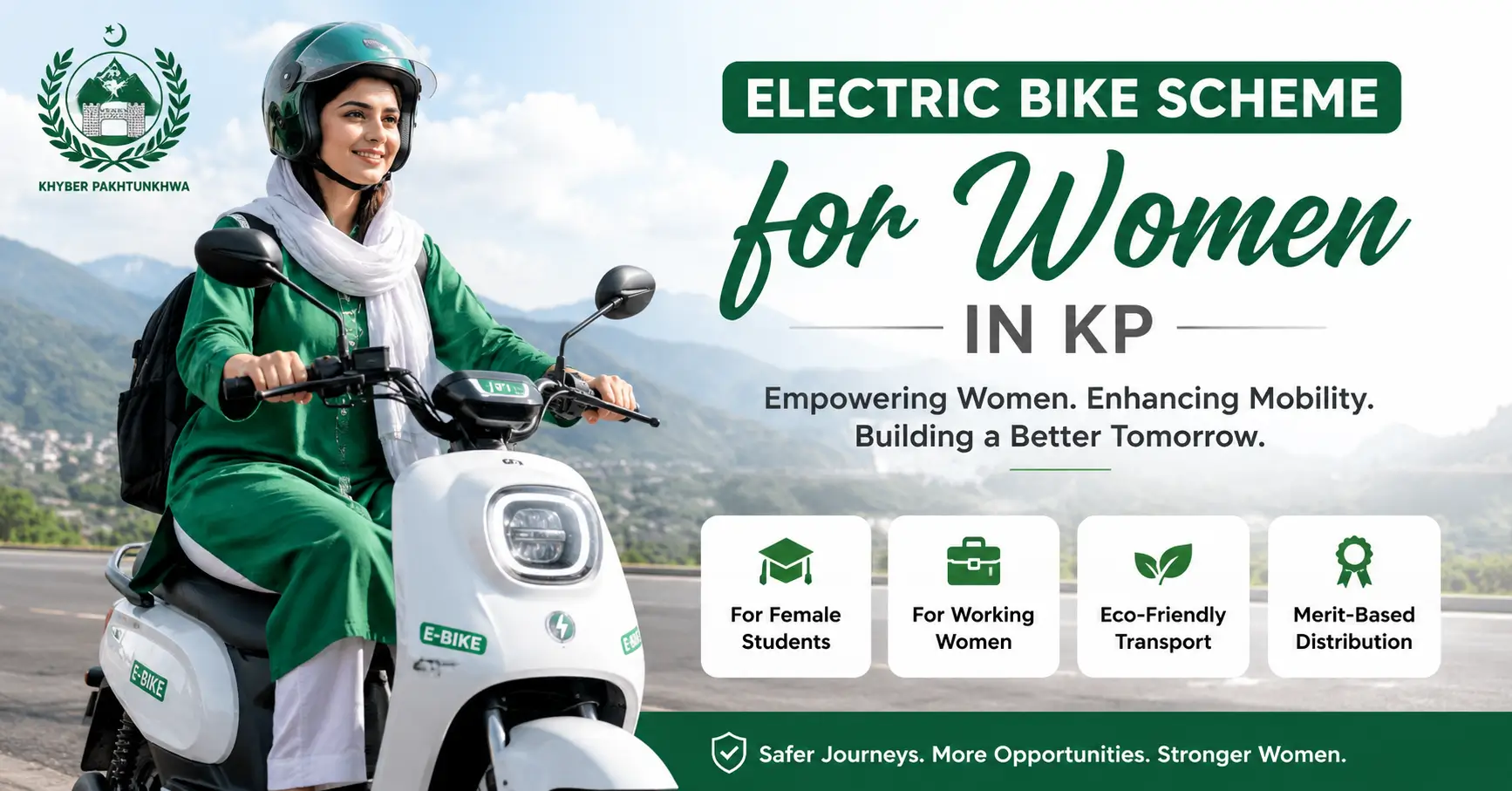
Khyber Pakhtunkhwa Chief Minister Sohail Afridi’s announcement of an electric bike scheme for women is a welcome step towards improving mobility, education, and employment opportunities for women across the province. Under the scheme, electric bikes will be provided on merit to female college and university students as well as working women, with the first phase expected to launch soon.
For many women in Khyber Pakhtunkhwa, and indeed across Pakistan, safe and affordable transport remains a daily struggle. Public transport can be irregular, overcrowded, or simply absent outside the major cities, and this often limits how freely women can travel to their classes, their workplaces, or their businesses. An electric bike offers a practical answer to that problem: lower running costs than fuel-powered transport, and a level of independence that many women in the province have not had access to before.
What the Chief Minister Actually Announced
Announcing the initiative at the 57th meeting of the provincial cabinet on August 28, the Chief Minister said distribution would be strictly merit based, and directed officials to ensure transparency at every stage. He also used the occasion to announce a related electric rickshaw scheme, to follow once the bike programme is under way, along with instructions to speed up work on electric buses for divisional headquarters. Taken together, the three initiatives point to a broader shift in the province’s thinking on transport, one that ties women’s mobility to a wider goal of cleaner, more affordable public and private transit.
ALSO READ
New Force to Collect Sanitation Charges Approved for Punjab’s 4.7 Million Properties
What’s Still Missing From the Picture
That said, an announcement is not yet a programme, and it is worth being honest about how much remains undecided. The government has not yet said how many bikes will be distributed, what the detailed eligibility criteria will look like, how women will actually apply, or when the scheme will formally open. No notification has appeared on any official Khyber Pakhtunkhwa government platform so far. This is not unusual for a scheme at this stage, but it does mean that anyone circulating registration links, eligibility lists, or bike numbers online ahead of an official notification should be treated with caution. The only information worth acting on will be what the provincial government itself confirms.
Why Implementation Will Matter More Than the Announcement
If implemented transparently and efficiently, the scheme could make a genuine difference in the daily lives of thousands of women in the province. But implementation will matter far more than the announcement itself. Selection needs to be seen to be fair, and the government will also need to think beyond the bikes themselves, toward the roads and traffic conditions women will actually be riding in. Safe streets, sensible traffic management, and an environment where women can travel without fear are just as important to this initiative’s success as the bikes are.
ALSO READ
NADRA Explains How Pensioners Can Re-Obtain Proof of Life Certificate
Women Do Not Have to Wait for KP’s Scheme Alone
It is also worth pointing out, since the KP announcement has understandably dominated recent coverage, that this is not the only avenue available to women looking for an affordable electric bike right now.
At the federal level, the Pakistan Accelerated Vehicle Electrification programme, run through the official portal pave.gov.pk, already reserves a share of its bike allocation, generally cited at around 25 percent, for women applicants across all four provinces as well as Azad Jammu and Kashmir and Gilgit Baltistan. Selection runs through a computerized balloting system, and applicants receive a subsidy toward the bike’s cost with the balance payable through an interest free installment plan. Because the exact subsidy figures have shifted since the programme’s launch, anyone interested should confirm current numbers directly on the official portal rather than through unofficial listings.
Punjab, for its part, already runs its own e-bike scheme for students through a dedicated provincial portal, offering bikes on easy installments. Sindh has gone further still, rolling out its Pink Scooties Project, which provides free electric scooters to female students and working women who hold a valid driving license, complete with registration, insurance, a helmet, and basic road safety training.
None of these programmes diminish what Khyber Pakhtunkhwa has proposed. If anything, they show that the direction the province has chosen, tying women’s mobility to affordable electric transport, is one that is already proving workable elsewhere in the country. What KP needs now is to move from announcement to notification, so that the women this scheme is meant to serve can actually begin to benefit from it.
ALSO READ
Proof of Life Certificate: What Pakistani Pensioners Need to Know
The Bigger Picture
The KP government’s focus on electric mobility, taken alongside the federal PAVE programme and the provincial schemes already running in Punjab and Sindh, points to a positive and fairly consistent direction in Pakistan’s transport policy: one that combines women’s empowerment with environmental responsibility and modern, affordable transportation.
Whether that promise is realised, in Khyber Pakhtunkhwa or anywhere else, will depend less on the announcements themselves and more on how honestly and efficiently they are carried through. For now, women in the province have a commitment worth watching closely, and women elsewhere in Pakistan already have working schemes worth exploring while they wait.