

Fuel Rationing, Hybrid Education, and Work-from-Home
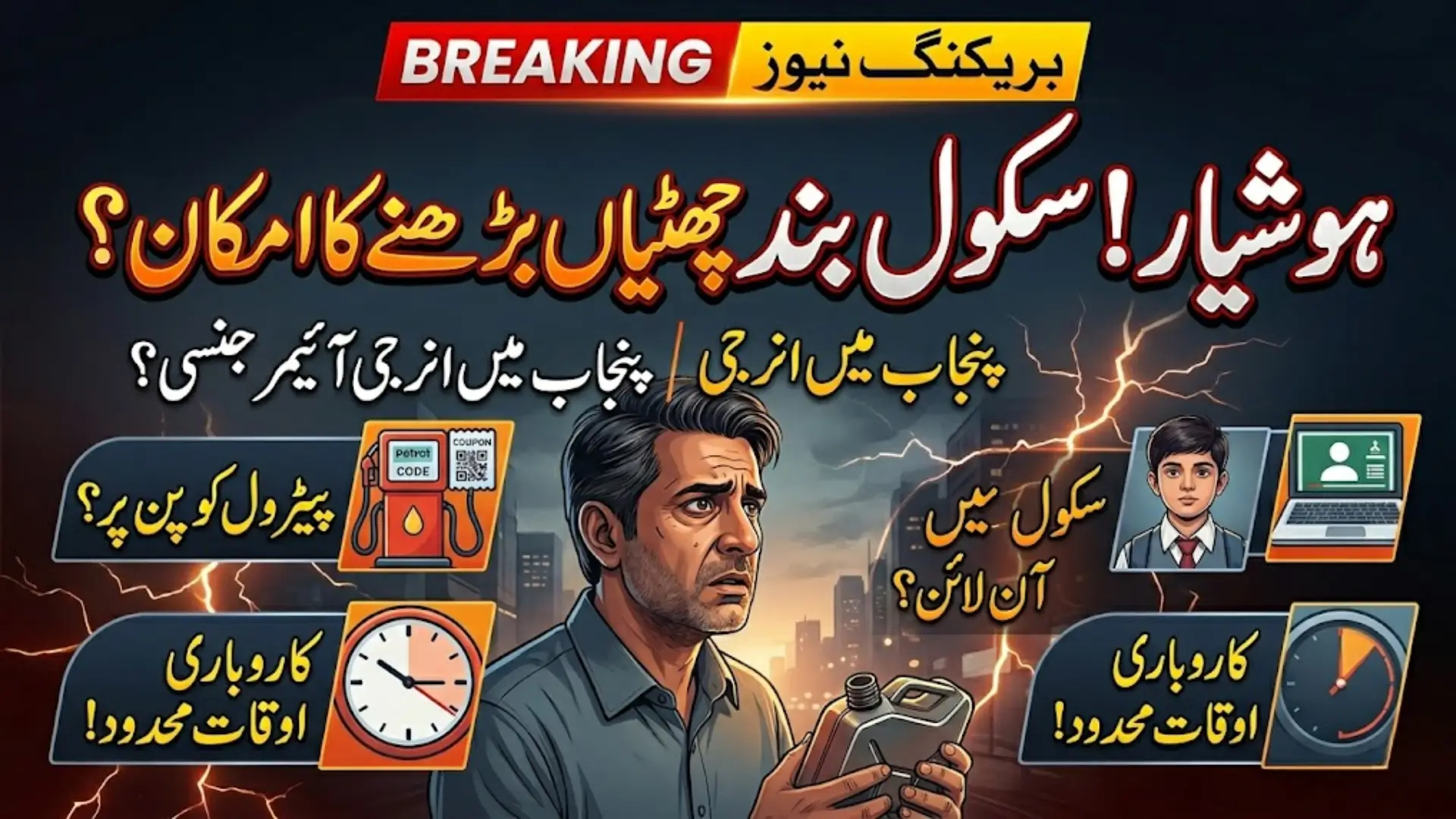
Punjab is currently facing a severe energy crisis, prompting the provincial Energy Department to send urgent recommendations to the government. The situation has raised concerns over fuel shortages and excessive electricity consumption, highlighting the need for immediate measures to conserve energy and maintain public services.
The government is reviewing these recommendations carefully, and final decisions are expected soon. The proposed measures focus on controlling fuel usage, adjusting educational and business activities, and optimizing electricity consumption to address the ongoing crisis.
Fuel Consumption Control Measures
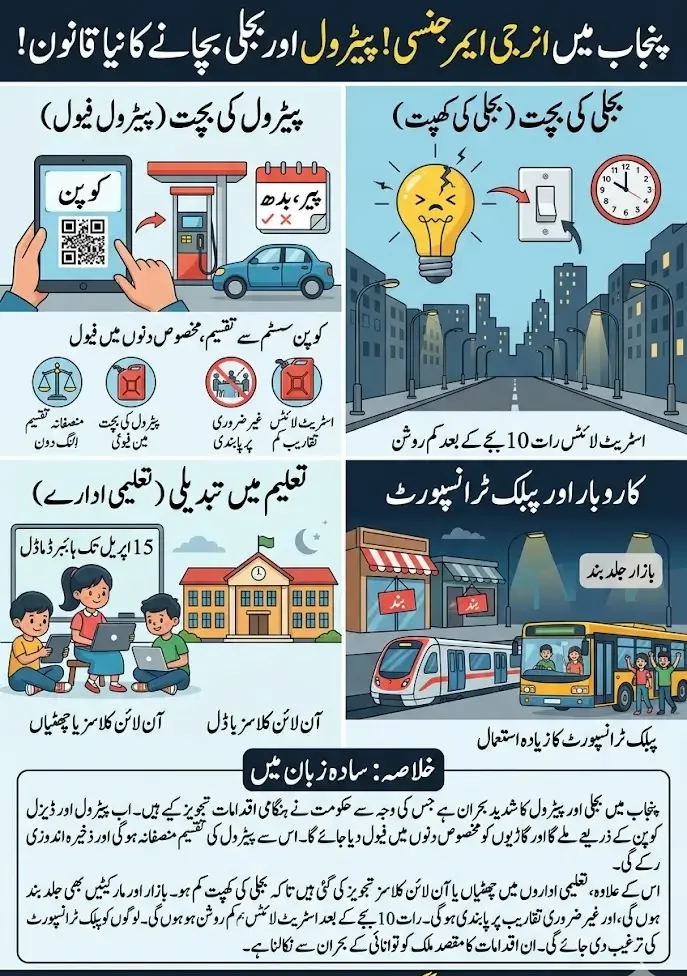
One of the key suggestions from the Energy Department is to regulate petrol and diesel distribution. Authorities recommend introducing a coupon-based or digital system to ensure fair and efficient fuel allocation. This would prevent hoarding and prioritize essential vehicles.
Additionally, the recommendations include providing fuel to limited vehicles on specific days. By restricting fuel supply, the government aims to reduce overall consumption and prevent a severe shortage in the coming weeks. These measures are crucial to maintaining transportation and industrial activities during this critical period.
Also read: Rising Fuel Prices Drive Demand for Plug-in Hybrid and Range-Extended Vehicles in Pakistan
Changes in Educational Activities
To save energy, the Energy Department has proposed temporary changes in the education sector. Recommendations include declaring holidays for educational institutions and implementing hybrid education until April 15.
Hybrid education, combining online and limited in-person classes, would reduce electricity usage in schools and colleges while ensuring that students continue learning. These measures also aim to decrease traffic and fuel consumption, as fewer students and staff commute to campuses daily.
Work-from-Home Strategy for Private Institutions
Another major recommendation is to encourage private institutions to adopt work-from-home policies. Remote working can significantly lower fuel and electricity usage by reducing the number of employees traveling to offices and using on-site facilities.
This approach not only supports energy conservation but also demonstrates a flexible model for businesses to operate efficiently during times of resource scarcity.
Also read: Punjab Market Timings After Ramadan Restored: New Office and Market Working Hours Announced
Restrictions on Business and Social Activities
The Energy Department has also recommended limiting non-essential activities to save electricity. Suggestions include:
- Banning unnecessary events and gatherings
- Restricting market hours to reduce operational energy consumption
These measures are designed to curb excessive use of electricity and fuel while still allowing essential commercial activities to continue.
Street Lighting and Electricity-Saving Measures
To further reduce electricity consumption, the department has proposed alternative modes for street lights after 10 PM. Switching off decorative lighting and LED billboards is another suggested step.
Such measures may seem small, but collectively, they can significantly lower energy demand and reduce the pressure on the provincial electricity supply.
Promotion of Public Transport
Improving public transport is another key recommendation. Increasing the number of metro and bus services can encourage people to use shared transport instead of personal vehicles, helping save fuel.
By making public transport more accessible and efficient, the government can achieve dual benefits: reducing fuel consumption and lowering traffic congestion during the energy crisis.
Also read: Lahore High Court Dowry Payment Decision: Husband Bound to Pay Dowry on Wife’s Demand
Government Review and Expected Decisions
Currently, the provincial government is reviewing all emergency recommendations. Final decisions are expected soon, and implementation could happen in phases depending on urgency and feasibility.
The proposed measures highlight a coordinated effort to address the Punjab energy crisis while ensuring that essential services continue uninterrupted.