

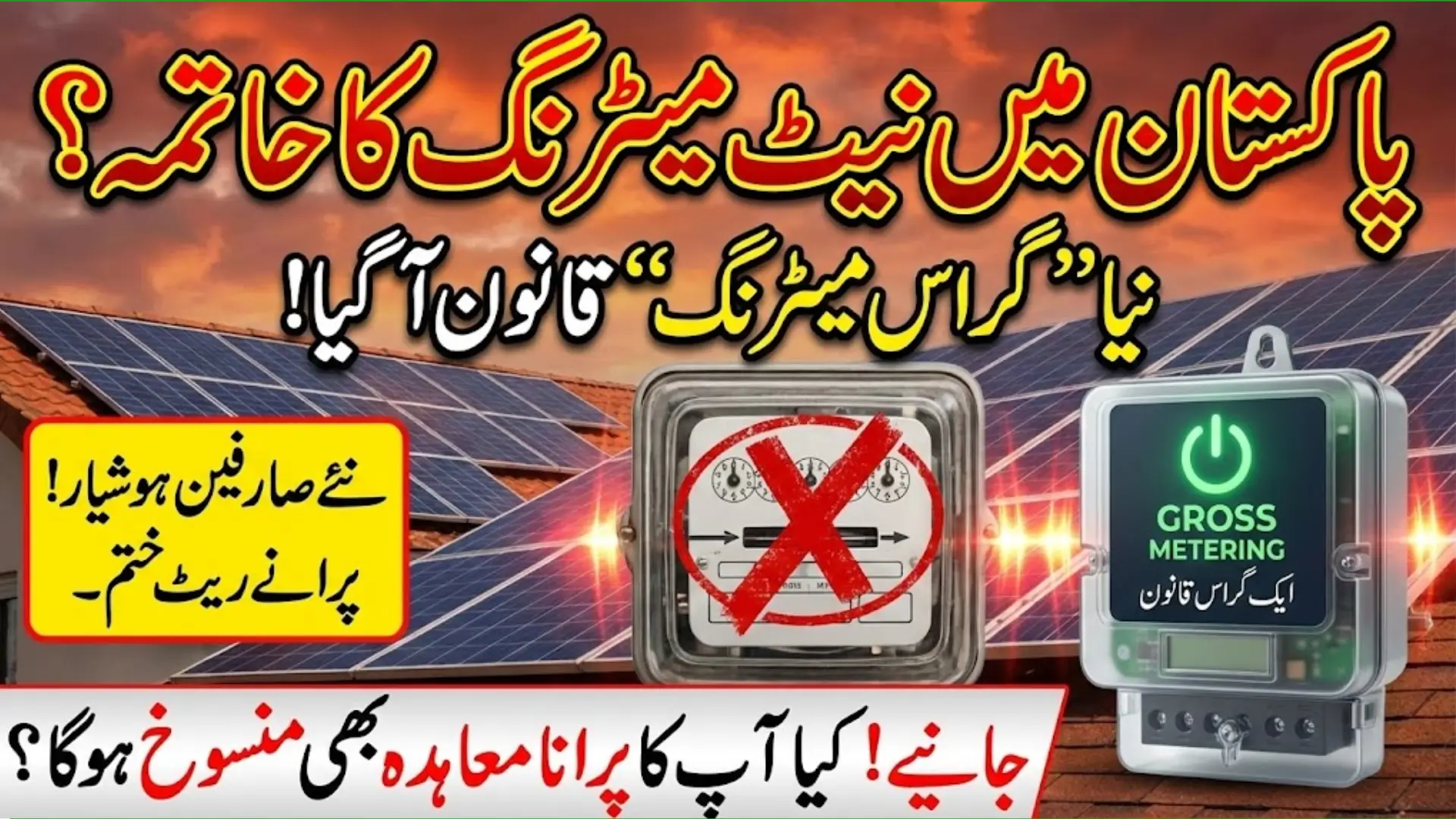
Nepra Gross Metering Proposal
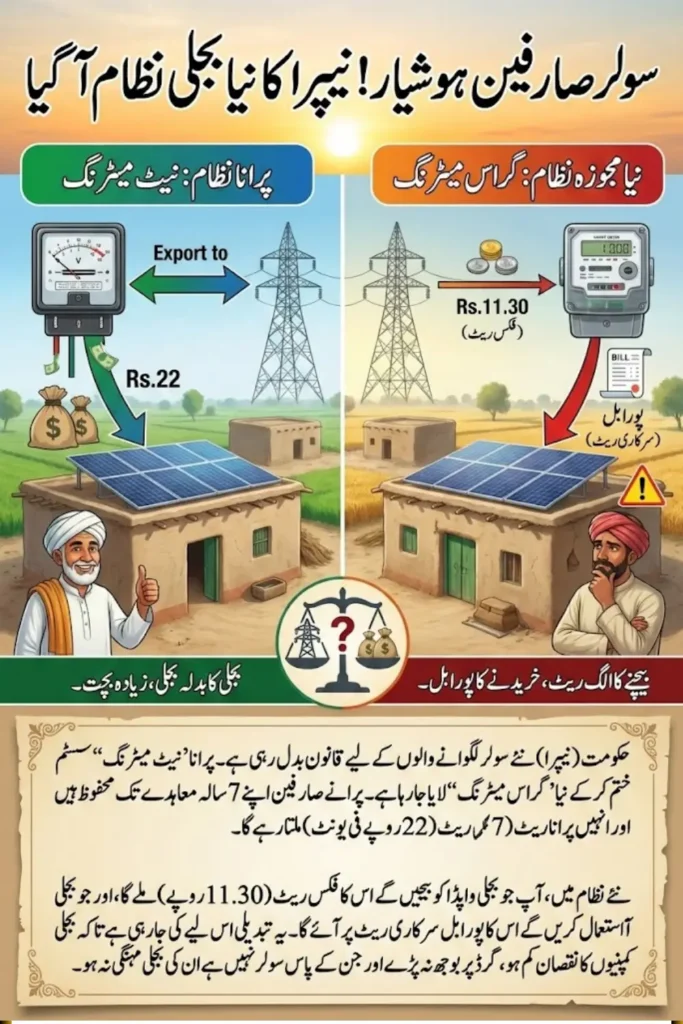
The National Electric Power Regulatory Authority (Nepra) has proposed replacing the existing net metering system with a gross metering framework for new rooftop solar consumers. The draft regulation, called Nepra Prosumer Regulations (NPR), aims to reduce the growing financial and operational burden on conventional grid users. Existing net metering consumers with valid seven-year agreements will continue under the current buyback rate of Rs. 22 per unit until their contracts expire.
The proposed changes are part of a broader effort to ensure sustainable solar growth while maintaining grid stability. Under gross metering, solar users will receive a fixed feed-in tariff for all electricity exported to the grid, while electricity drawn from the grid will be billed at standard retail rates. This approach separates production and consumption charges to maintain fairness among all consumers.
Net Metering vs Gross Metering
Under net metering, electricity exported to the grid offsets the electricity imported from it. This reduces monthly bills for solar consumers and encourages rooftop solar adoption. However, officials say the current system imposes an estimated financial burden of up to Rs. 2 per unit on non-solar consumers.
نیٹ میٹرنگ کے تحت، گرڈ کو برآمد ہونے والی بجلی اس سے درآمد شدہ بجلی کو پورا کرتی ہے۔ اس سے شمسی صارفین کے ماہانہ بلوں میں کمی آتی ہے اور چھت پر شمسی توانائی کو اپنانے کی حوصلہ افزائی ہوتی ہے۔ تاہم، حکام کا کہنا ہے کہ موجودہ نظام ایک اندازے کے مطابق روپے تک کا مالی بوجھ ڈالتا ہے۔ غیر شمسی صارفین پر فی یونٹ 2۔
Gross metering compensates solar users at a fixed rate for all exported electricity. Key features include:
- Feed-in tariff: Rs. 11.30 per unit for new installations
- Contract period: five years, extendable on mutual agreement
- Separate billing for grid electricity drawn
Electric Bus Service in Jhelum: A Step Towards Eco-Friendly Transport Check Now
| Feature | Net Metering | Gross Metering |
|---|---|---|
| Compensation | Reduces electricity bills by offsetting consumption | Fixed feed-in tariff for exported electricity |
| Contract | 7-year agreements for existing users | 5-year agreements for new users |
| Impact on Grid | Higher financial burden on non-solar consumers | Fairer billing and reduced tariff escalation |
Financial Impact on the Grid
Rapid rooftop solar growth has caused significant revenue losses for distribution companies. In FY2024, a 3.2 billion unit drop in grid electricity sales led to nearly Rs. 101 billion in losses. These losses contributed to an average tariff increase of Rs. 0.9 per kilowatt-hour for other consumers.
Long-term projections indicate that by FY2034, lost grid sales could reach 18.8 billion units. This could result in a financial impact of Rs. 545 billion and potential tariff increases of Rs. 5–6 per unit. Officials note that the grid is effectively being used as battery storage, with solar users exporting surplus power while avoiding fixed system charges.
Easypaisa’s Digital Banking Success Highlights Pakistan’s Cashless Future Check Now
Grid Stability Concerns
The rapid growth of net-metered solar capacity, now around 6,000 MW, raises stability concerns. During low-demand periods, especially in winter, excess generation can overload the system. Experts warn that unchecked solar expansion could threaten the reliability of the grid.
Other risks include misuse, such as consumers exporting double their sanctioned load. The Sri Lanka blackout is cited as an example of how sudden solar surges can disrupt national electricity supply. Distribution companies are now installing smart meters to monitor and control exports in real time.
Steps to Manage Solar Expansion
Nepra has invited stakeholder feedback within 30 days and may hold a public hearing before finalizing the regulations. The gross metering system aims to:
نیپرا نے 30 دنوں کے اندر اسٹیک ہولڈرز کی رائے طلب کی ہے اور وہ ریگولیشنز کو حتمی شکل دینے سے پہلے عوامی سماعت کر سکتا ہے۔ مجموعی پیمائش کے نظام کا مقصد ہے:
- Reduce financial burden on non-solar consumers
- Encourage responsible rooftop solar installation
- Maintain grid stability during peak and off-peak hours
| Action | Purpose |
|---|---|
| Smart meters | Real-time monitoring of electricity exports |
| Feed-in tariff | Fair compensation for exported electricity |
| Public consultation | Ensure stakeholder input before finalization |
FAQs
Q: What is the main change in the Nepra Gross Metering Proposal?
The proposal replaces net metering with gross metering for new rooftop solar consumers, offering a fixed feed-in tariff for exported electricity.
Q: Will existing net metering consumers be affected?
No, existing users with valid seven-year contracts will continue at Rs. 22 per unit until their agreements expire.
Q: What is the proposed feed-in tariff for new solar installations?
New rooftop solar users will be compensated at Rs. 11.30 per unit for all electricity exported under gross metering.
Q: How will the proposal impact grid stability?
It aims to maintain grid stability by reducing excess daytime generation and monitoring electricity exports through smart meters.