
Nutrition-Sensitive Social Protection Nashonuma Programme
Pakistan recently hosted a global learning event in Islamabad focused on nutrition-sensitive social protection. Governments and development partners gathered to share practical experience and policy lessons. The event highlighted how social protection systems can directly improve nutrition outcomes for vulnerable groups.
بات چیت نے بینظیر انکم سپورٹ پروگرام کے ذریعے اس علاقے میں پاکستان کی قیادت کی توجہ دلائی۔ بات چیت کا مقصد خیالات سے آگے بڑھنا اور غذائی قلت کے خلاف حقیقی کارروائی کی حمایت کرنا تھا۔Key discussion areas included:
- Linking cash transfers with nutrition services
- Sharing evidence-based approaches
- Strengthening national social protection systems
Global Collaboration under the Nutrition Task Force
The learning event was organised under the Global Task Force on Social Protection for Nutrition. It was co-hosted by the governments of Pakistan and Timor-Leste, with technical support from the World Food Programme. Delegates from Asia and Africa participated in the exchange.
Countries shared challenges, solutions, and innovations to improve nutrition outcomes. The goal was to build long-term commitment and coordination across borders.
Participating countries included:
- Bangladesh and Nepal
- Cambodia and Lao PDR
- Niger, Timor-Leste, and Pakistan
Pakistan’s Leadership through BISP
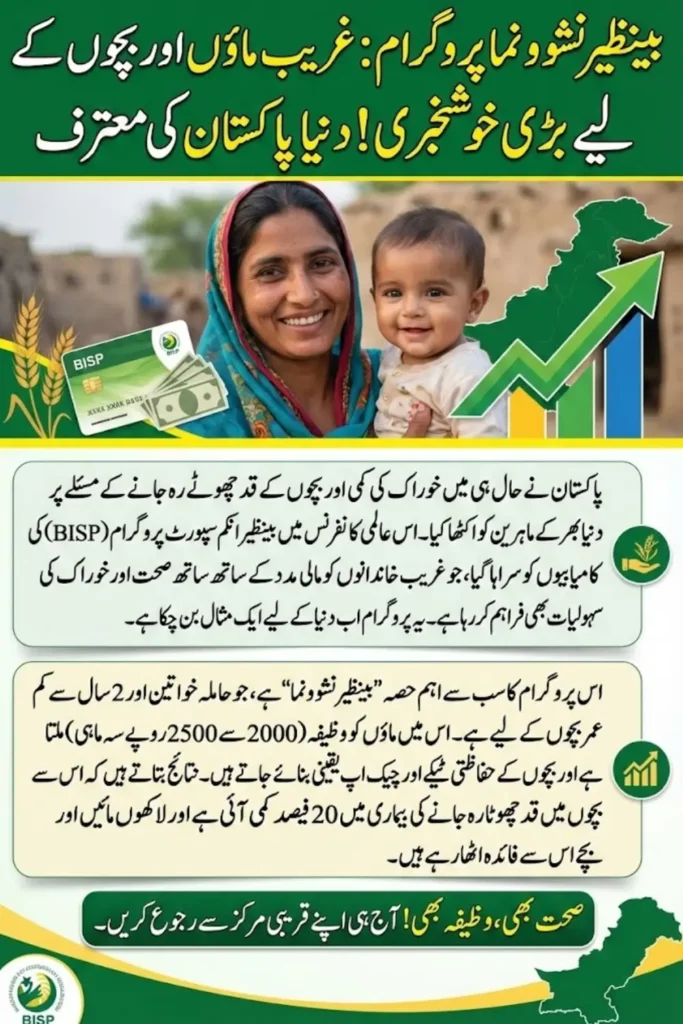
Since its launch in 2008, BISP has transformed Pakistan’s social protection system. It replaced fragmented welfare schemes with a nationally coordinated programme. Over time, BISP introduced digital payments and beneficiary databases.
Today, BISP supports nearly 10 million families across the country. Its structure allows nutrition to be integrated into poverty reduction efforts in a cost-effective way.
Major BISP initiatives include:
- Benazir Kafaalat cash support
- Taleemi Wazaif education incentives
- Benazir Nashonuma nutrition programme
Benazir Nashonuma Programme and Early Nutrition
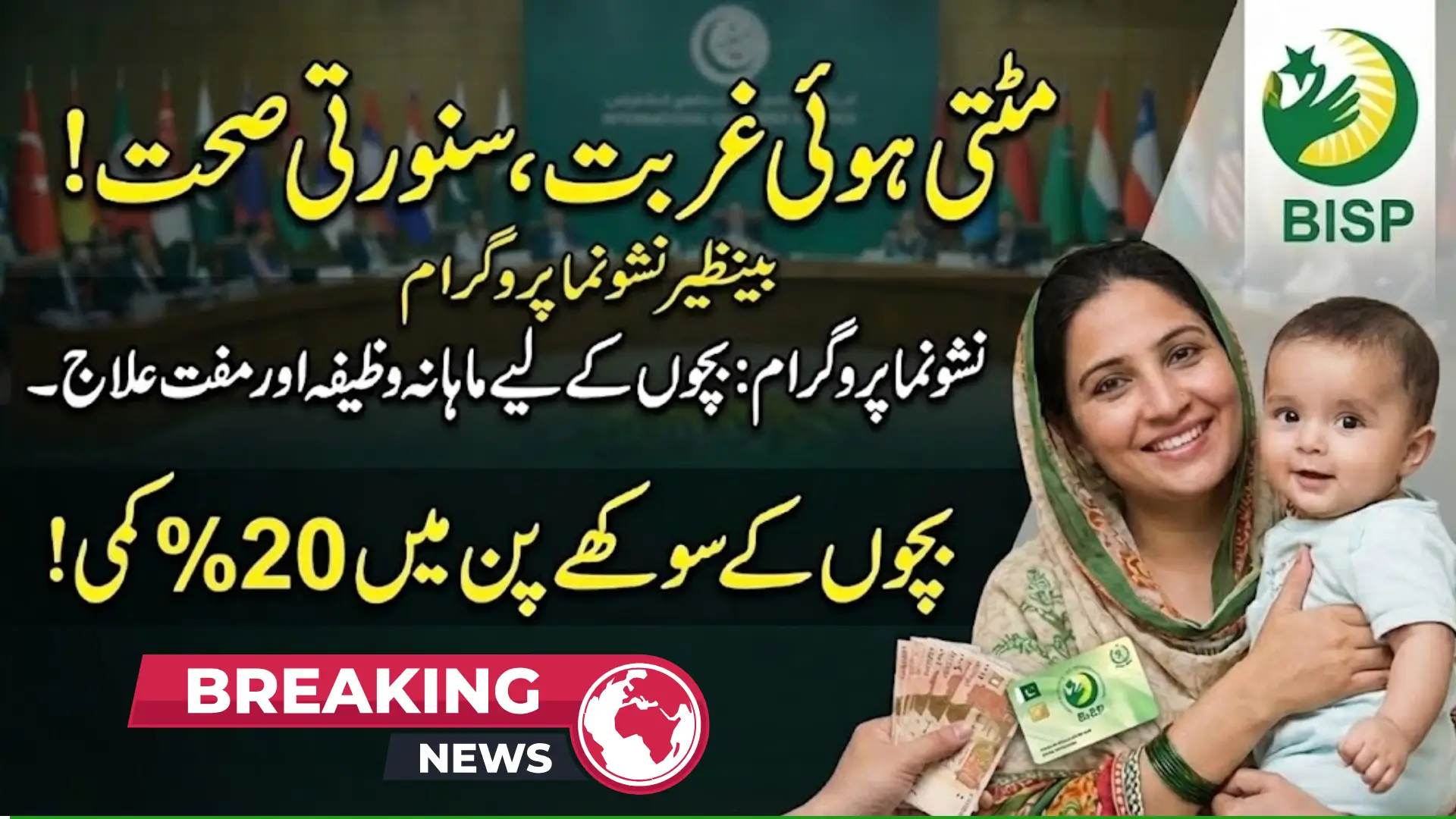
The Benazir Nashonuma Programme was launched in 2020 to address child stunting. It focuses on pregnant and breastfeeding women and children under two years of age. The programme targets the first 1,000 days, a critical period for child development.
An independent evaluation showed strong results, with stunting reduced by 20 percent among beneficiaries at six months. This impact places Nashonuma among the most effective nutrition programmes implemented at scale.
Programme objectives include:
- Preventing stunting in young children
- Improving maternal weight gain
- Reducing micronutrient deficiencies
Programme Design, Coverage, and Impact
Nashonuma provides conditional cash transfers linked to health services. Mothers receive quarterly support while committing to antenatal visits, child immunization, and nutrition sessions. Girls receive slightly higher cash support to promote gender equity.
The programme started in 14 districts and later expanded nationwide. It now operates in 158 districts with fixed and mobile centres.
Cash Support Structure
| Beneficiary Category | Quarterly Support |
|---|---|
| Pregnant woman | PKR 2,000 |
| Boy child | PKR 2,000 |
| Girl child | PKR 2,500 |
Beneficiary Reach
| Group | Individuals Reached |
|---|---|
| Pregnant women | 645,800 |
| Children under two | 630,000 |
Link with Sustainable Development Goals
Nutrition-sensitive social protection directly supports global development targets. Pakistan’s approach aligns with Zero Hunger and universal social protection goals. Investing in early nutrition strengthens human capital and long-term economic growth.
Experts emphasize that nutrition is one of the most cost-effective development investments. Sustained political will and stable financing are essential to maintain progress.
Key SDG links include:
- SDG 2: Zero Hunger
- SDG 1.3: Universal social protection
Registration Started With a New Code In the Rashan Program
Frequently Asked Questions
What is nutrition-sensitive social protection?
It combines cash support with health and nutrition services to improve long-term well-being.
Why is the first 1,000 days important?
This period shapes physical growth and brain development, affecting lifelong outcomes.
How many people has Nashonuma reached so far?
More than 1.27 million pregnant women and young children have benefited.
Why is BISP important for Pakistan?
It provides nationwide support while integrating poverty reduction with nutrition goals.