
NADRA Orphan Identity Registration 2026
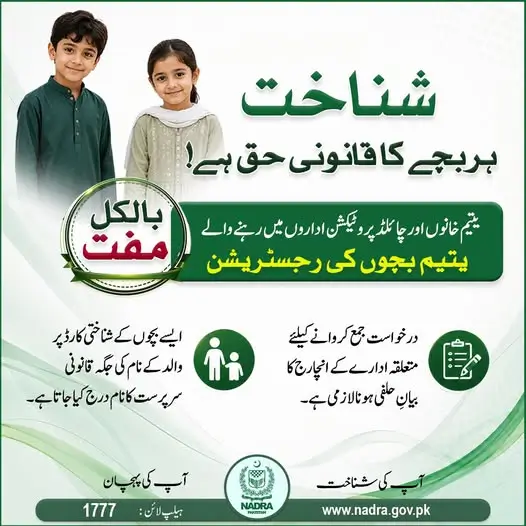
Every child in Pakistan has a legal right to an official identity, and NADRA (National Database and Registration Authority) has taken a fresh step to make sure no orphan is left without one. Under a new initiative, children residing in orphanages and other child protection institutions can now get registered completely free of cost, without their families having to worry about complicated paperwork or fees.
Free Registration for Children in Orphanages
NADRA’s identity registration drive is specifically designed for children who are living under the care of orphanages, shelters, and recognised child protection institutions. The purpose is simple: every child, regardless of family background, deserves a verified legal identity that opens the door to education, healthcare, and other basic services.
This registration facility is being offered absolutely free, meaning no fee is charged to the institution or the child’s guardian at any stage of the process.
Who Can Apply for This Facility
The scheme covers orphans who are officially residing in:
- Government-run orphanages
- Private child protection institutions
- Recognised shelter homes for orphaned or abandoned children
Also read: Honhar Scholarship Award Letter: Next Steps for Students
Documents Required for Registration
Unlike a typical CNIC application, this process does not require biological parents’ records, since the applicants are children without living guardianship in the traditional sense. Instead, NADRA requires the following:
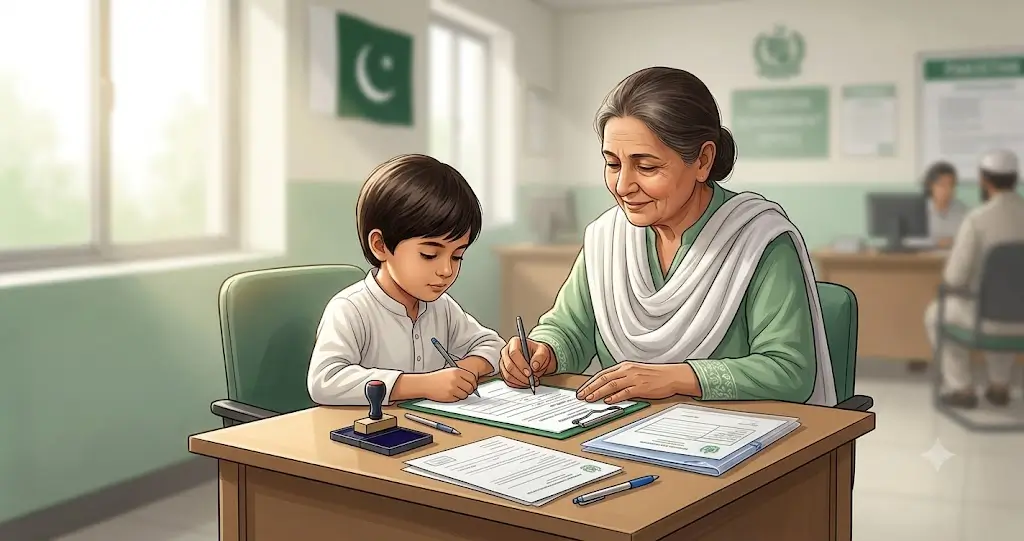
- A sworn affidavit (sworn statement) from the in-charge or head of the concerned orphanage or institution
- Basic personal details of the child as maintained in the institution’s records
This affidavit acts as official confirmation from the institution, verifying the child’s identity and residency status, which allows NADRA to proceed with registration.
Legal Guardian’s Name Instead of Father’s Name
One of the most important features of this initiative is how the identity card is structured for these children. Since many orphans do not have a father’s name on record, NADRA allows the name of the legal guardian (usually the institution’s in-charge or a designated caretaker) to be entered in the column where the father’s name would normally appear.
This ensures that the child’s CNIC remains fully valid and functional for all official purposes. Without leaving that field blank or creating legal complications later in life.
Also read: 10th Class Result 2026: Complete Guide for Punjab Board Students
Why This Initiative Matters
A legal identity document is the first step toward accessing almost every government service in Pakistan. From school admissions and scholarships, as well as healthcare and social welfare programs such as BISP and Ehsaas. Without a CNIC or B-Form, orphaned children often face difficulties proving their identity, which can block them from these opportunities.
By simplifying the process and removing the cost barrier. NADRA is helping ensure that orphaned and institutionalised children are not excluded from the identity system simply because of their circumstances.
How to Apply
Institutions wishing to register children under their care can follow these steps:
- Prepare a sworn statement/affidavit from the institution’s in-charge confirming the child’s details and residency
- Visit the nearest NADRA registration centre along with the required documents
- Submit the application under the orphan registration category
- Once verified, the child’s identity card will be issued with the legal guardian’s name recorded in place of the father’s name
NADRA Helpline and Contact
For further details or assistance regarding this facility, orphanages and institutions can contact NADRA directly:
- Website: www.nadra.gov.pk
- Helpline: 1777
Conclusion
NADRA’s free identity registration facility for orphans is a meaningful step toward inclusive documentation in Pakistan. By allowing legal guardians’ names to be recorded and removing all registration costs. The initiative gives thousands of institutionalised children a legitimate path to a recognised identity and, through it, access to the educ