
NADRA QR code ID card
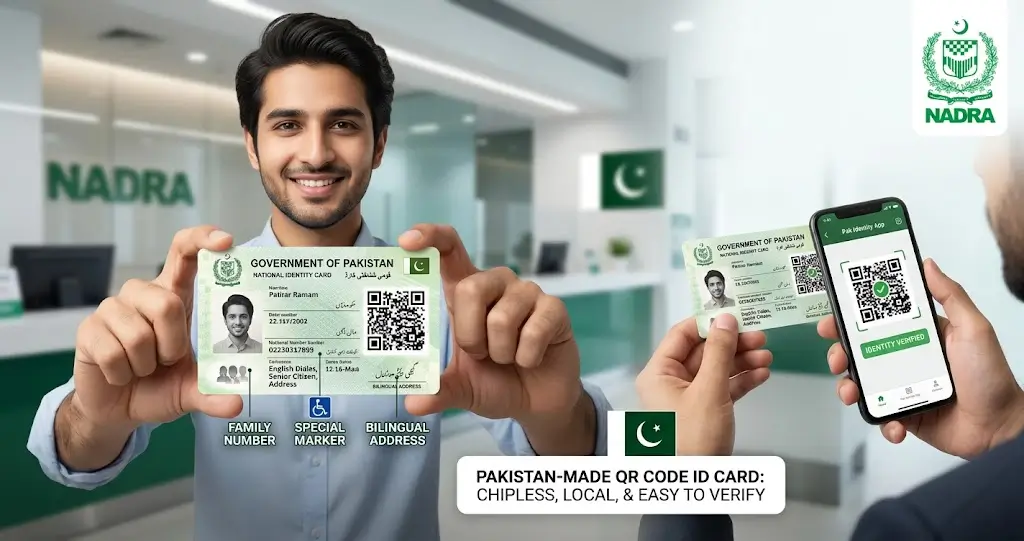
Pakistan has taken a fresh step toward digital self-sufficiency. NADRA has rolled out a new chipless national identity card that relies on a secure QR code instead of an imported microchip. The card is manufactured locally by the National Security Printing Company (NSPC) in Karachi, built to NADRA’s own security standards.
Why the Chip Was Replaced
For years, Pakistan’s smart ID cards depended on microchips sourced from abroad. The catch: chip readers were never widely available across the country, so most of the chip’s features went unused. Switching to a QR code fixes this gap. The code can be scanned with an ordinary smartphone camera through the official Pak Identity (PakID) app, making verification faster and available to almost anyone with a phone.
What’s Approved and When
The federal government cleared the new card design on February 23, 2026. Rollout is happening in stages, not all at once:
| Phase | Card Type | Start Date |
|---|---|---|
| Phase 1 | Standard National ID Card (replacing the plain Teslin NICC) | August 14, 2026 |
| Phase 2 | NICOP (Overseas Pakistanis) and Juvenile Cards | January 2027 |
| Phase 3 | Pakistan Origin Card (POC) | To be announced |
Existing cards, chip-based or otherwise, remain valid until their printed expiry date. No one needs to rush to a NADRA office just because of this update.
ALSO READ
Punjab Launches Its Biggest-Ever Shrimp Farming Project to Boost Blue Economy
What the QR Code Actually Stores
The QR code holds the cardholder’s photograph along with core identification details, letting banks, telecom companies, hospitals, Pakistan Railways, and police scan and verify identity through dedicated software. This also cuts down on manual data-entry errors when institutions record a person’s name, address, or other details.
New Details Printed on the Card
Beyond the QR code itself, the redesigned card adds a few practical touches:
- Bilingual name and address (Urdu and English)
- A family number field
- Special markers for persons with disabilities, senior citizens, and organ donors
- A distinct identifier for citizens of Azad Jammu and Kashmir, based on their State Subject Certificate
- Updated visible and UV-only hidden security features
ALSO READ
Revolution in NADRA Services: Pak ID App Transforms Identity Access in 2026
Why This Matters for Ordinary Citizens
The old chip-based card, introduced roughly 14 years ago, promised smart features that most people never actually got to use because the reader infrastructure never caught up. A QR code sidesteps that problem entirely — verification now just needs a phone, not specialized hardware. That makes the system more practical for everyday use, from opening a bank account to boarding a train.
Bottom line: If your current CNIC or NICOP is still valid, there’s nothing to do right now. New applicants and renewals from August 14, 2026 onward will automatically receive the QR-code version.