
Punjab Rahmat Card Program
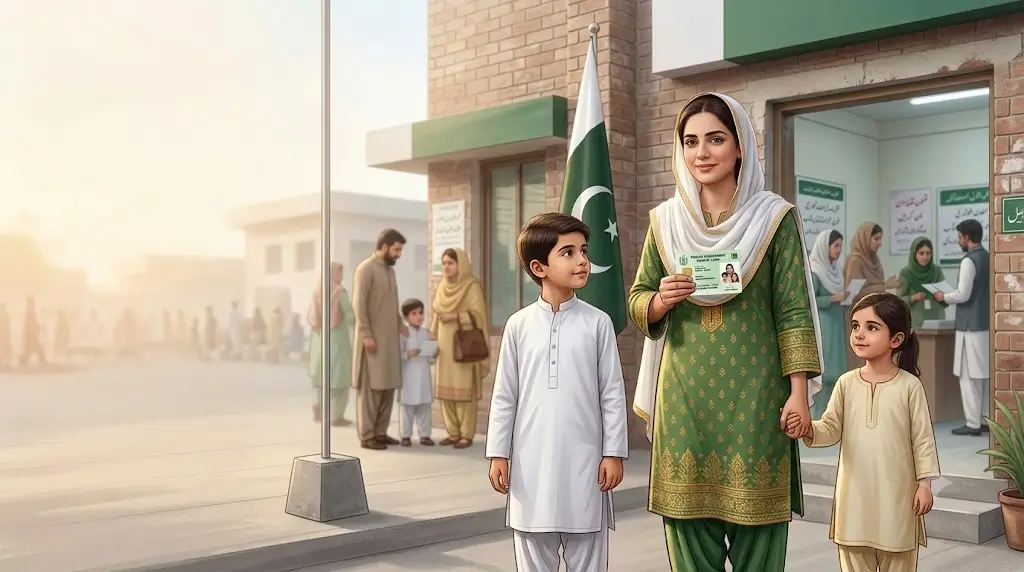
The Punjab government has rolled out a fresh welfare initiative called the Rahmat Card Program, built specifically to support widows and orphaned children who often fall outside the reach of regular social protection schemes. Unlike short-term relief efforts, this program is designed as a permanent, institutional support system that replaces informal charity with a documented, verifiable, and dignity-focused disbursement model.
The provincial government has set aside Rs. 5 billion for this initiative, signalling a long-term commitment rather than a one-time relief package. The core objective is straightforward: help widows and orphans rebuild financial stability so they are not left dependent on irregular aid.
How Much Financial Support Will Families Receive?
In its first phase, the Punjab Rahmat Card Program is targeting around 50,000 families across Punjab. The financial breakdown works as follows:
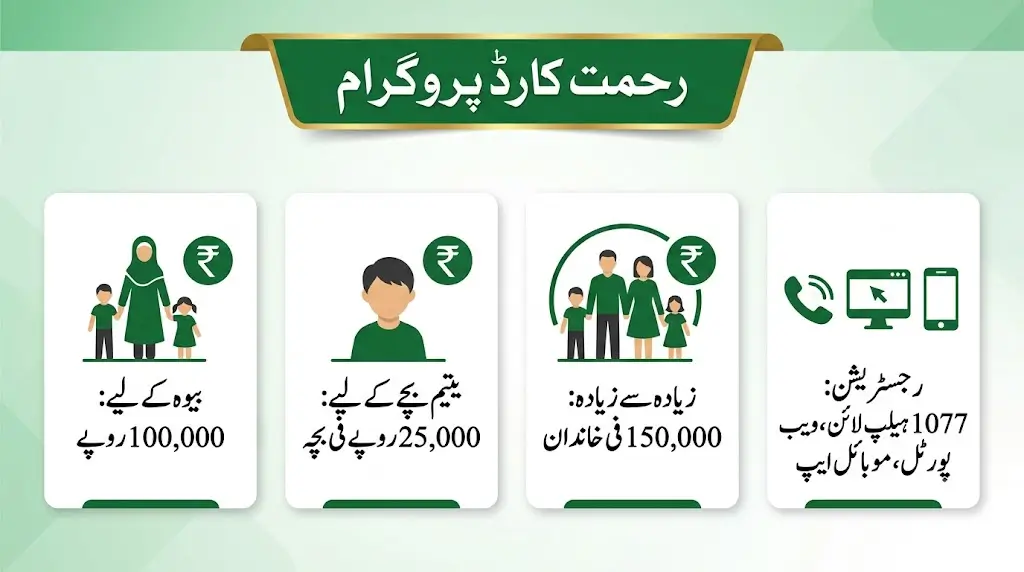
- Widows receive a one-time grant of Rs. 100,000
- Each orphan child in the household adds Rs. 25,000
- Total assistance is capped at Rs. 150,000 per family
This structure means a widow with multiple children under her care can receive meaningful support, while the cap ensures the budget is distributed fairly across a larger number of deserving families.
Also read: Punjab Launches 1,500 Agriculture Graduates Internship Scheme Under CM Maryam Nawaz’s Reform Program
Digital and Transparent Payment System
One of the standout features of this program is how payments are processed. Rather than manual disbursement, the government has adopted a fully digital, biometric-verified payment model in partnership with the Bank of Punjab and JazzCash. This approach reduces the risk of fraud, duplicate claims, or funds being intercepted before reaching the actual beneficiary.
Who Is Eligible for the Rahmat Card?
Eligibility isn’t determined arbitrarily; the program is linked directly to the Punjab Socio-Economic Registry (PSER), which cross-checks applicant data against NADRA records to confirm genuine need. This merit-based screening ensures that assistance reaches families who are Zakat-eligible and genuinely vulnerable, rather than being distributed on a first-come-first-served basis.
How to Apply for the Rahmat Card Program
Applicants have multiple options to register, making the process accessible even for those without internet access:
- Online: through the official web portal
- Mobile App: dedicated application for registration and status tracking
- Helpline: call 1077 for assistance
- In-Person: visit the nearest Zakat and Ushr office
Applicants are encouraged to keep their CNIC and family details updated in NADRA records before applying, since mismatched information is one of the most common reasons for delayed verification.
Also read: LLB Program Duration Reduced to 4 Years: HEC Announces Major Policy Shift for Law Students
Why This Program Matters
Widows and orphans are frequently among the most economically vulnerable groups, yet many existing welfare programs are not tailored specifically to their needs. By combining a fixed financial grant with biometric-secure disbursement and PSER-based verification, the Punjab Rahmat Card Program aims to close that gap with a system built for accountability rather than one-off relief.
FAQs
Q1: How much money does a widow get under the Rahmat Card Program?
A widow receives Rs. 100,000, plus Rs. 25,000 for each orphan child, up to a maximum of Rs. 150,000 per family.
Q2: How can I register for the Rahmat Card?
You can apply via the official web portal, the mobile app, the 1077 helpline, or by visiting your nearest Zakat and Ushr office.
Q3: Is the Rahmat Card linked to PSER?
Yes, eligibility is verified through the Punjab Socio-Economic Registry along with NADRA data.
Q4: How many families will benefit in the first phase?
The first phase targets 50,000 families across Punjab.
Q5: How are payments disbursed?
Payments are made through biometric verification via Bank of Punjab and JazzCash for secure, direct transfer.