
Electricity and Gas Relief for BISP Beneficiaries
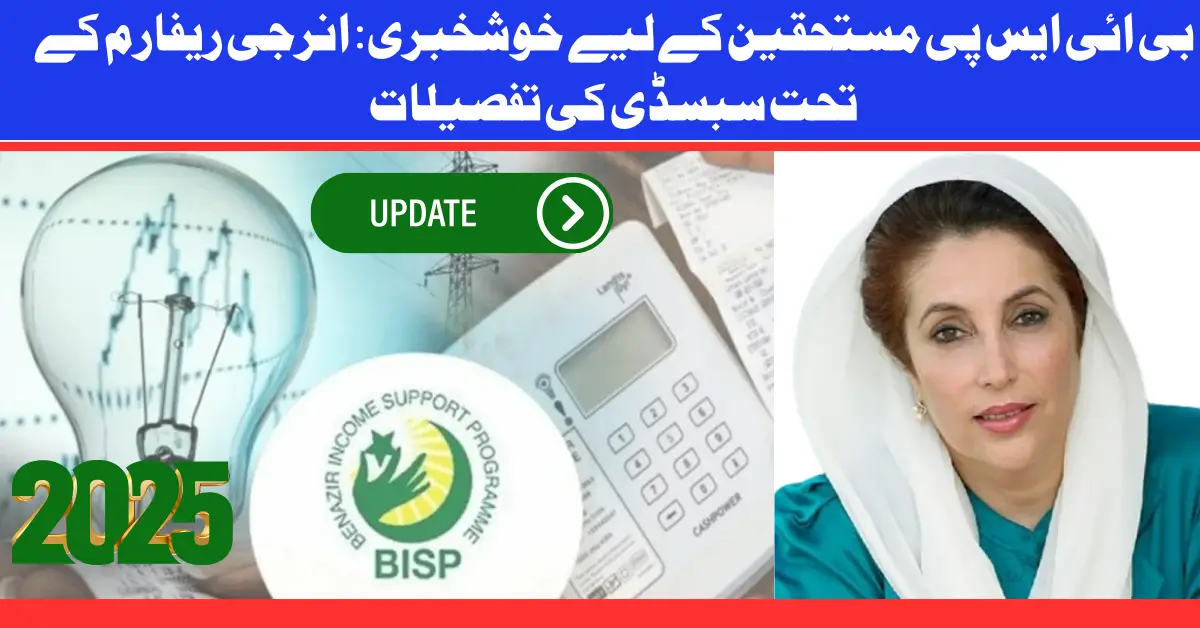
The Government of Pakistan, through the Power Division, is launching a major reform of its energy subsidy policy to assist only the truly deserving segments of society. As outlined in the 2025 Energy Reform Plan, electricity and gas relief for BISP beneficiaries will be prioritized, so that subsidies go solely to individuals enrolled in the Benazir Income Support Programme (BISP). This major policy shift is part of a broader effort to improve the country’s fiscal health, promote fairness, and ensure that public resources are used wisely.
Under the new 2025 energy plan, eligible BISP families will benefit from reduced utility costs: a targeted electricity subsidy starting January 2027, with gas consumers joining the targeted system from 1 July 2027.
Understanding the Energy Reform Plan for BISP Beneficiaries
The new Energy Reform Plan targets financial aid more effectively. For years, subsidies were provided across the board, meaning both poor and rich households received the same level of financial support. This created inefficiencies and drained national resources.The reform, supported by the International Monetary Fund (IMF) and the World Bank, aims to:
- Reduce financial losses in the energy sector
- Stop subsidizing high-energy consumers who can afford full prices
- Support only the poor and deserving families through BISP verification
Only BISP-verified households will qualify for the targeted electricity subsidy from January 2027, while gas consumers will join the targeted system from 1 July 2027. Consumer registration and linking to the NSER database, with validity checks, is now committed to the IMF for completion by end-November 2026, with World Bank support.
How 8171 BISP Online Messages Are Verified to Detect Scammers
How to Qualify for the Subsidy?
If you want to get this subsidy from the Government of Pakistan, you must first meet its eligibility criteria — start by running a check BISP eligibility by CNIC — and then you can benefit from this program, which is explained below.
- Be a BISP beneficiary: Only families registered with BISP will be eligible.
- Have a PMT score of 32 or below: This poverty score is calculated based on your income and living conditions. You can run a PMT score check to see where your household stands.
- Complete the NSER survey: This survey, conducted by BISP, helps determine your financial condition and eligibility for assistance.
If you’ve received recent payments from BISP or provincial programs like Punjab Ehsaas, you may already qualify.
How to Update Your NSER Record
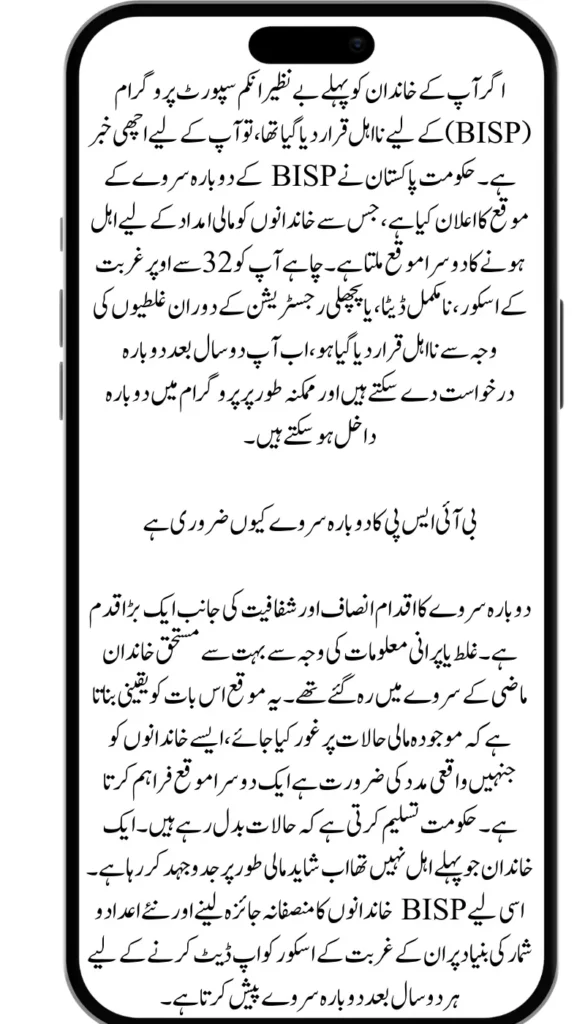
Eligibility for the new subsidy scheme requires a PMT score of 32 or below. A score cannot be “lowered” directly; the verified path is a fresh in-person NSER Dynamic Survey at the nearest BISP tehsil office. Follow our NSER survey registration guide to complete it accurately, since your record directly affects eligibility for this and other government assistance programs.
- Power and gas subsidies
- Cash support
- Food security initiatives
CM Maryam Nawaz Launches Pioneering Free Insulin Program for Children with Diabetes
Cheap Electricity for the Deserving
People already receiving cash aid under BISP will now get cheap electricity too. This two-fold support, financial aid + reduced utility costs is a major step to:
- Relieve financial stress
- Improve the quality of life for low-income households
- Promote energy conservation by encouraging responsible usage
Why Is the Subsidy Model Changing?
For years, Pakistan’s energy subsidy model failed to differentiate between the rich and the poor. As a result:
- Wealthier families who consumed more power still enjoyed subsidies.
- The poor, despite their limited consumption, got the same or even less benefit.
This unequal system:
- Increased the fiscal burden
- Caused wasteful energy usage
- Undermined social fairness
The new policy is pro-poor and targeted, ensuring that only low-income families benefit.
Timeline and Key Milestones
The government has set clear steps to implement this reform smoothly:
| Timeline | Action |
| May 2025 | Final impact report from PPMC |
| June 2025 | Plan approval by the Prime Minister and Cabinet |
| End-November 2026 | Electricity consumers linked to the NSER database with validity checks (IMF commitment; World Bank support) |
| January 2027 | New targeted electricity subsidy system takes effect (IMF structural benchmark) |
| 1 July 2027 | Gas consumers linked to the targeted subsidy database (direct-transfer mechanism “far from ready” as of Oct 2026, Business Recorder) |
| FY 2027 Budget | Full removal of Tariff Differential Subsidy (TDS) |
Benazir Skill Training Program: Empowering Pakistan’s Underprivileged
Gas Subsidy Reform Also on the Way
Energy reform isn’t limited to electricity. Gas consumers will join the targeted subsidy system from 1 July 2027. The Petroleum Division is seeking IMF approval for a single gas tariff from that date — a uniform rate of about Rs 1,708/MMBtu with roughly Rs 162 billion allocated, abolishing the existing 12-slab structure.
Energy Efficiency Measures for a Better Future
In addition to targeted subsidies, the government is focusing on energy conservation through a national campaign. Measures include:
- Enforcing Minimum Energy Performance Standards (MEPS) on:
- Fans
- LED bulbs
- Refrigerators
- ACs and motors
- Pakistan notified MEPS-compliant public procurement through the PPRA in December 2025, as recorded in the IMF staff report.
- By end-December 2026, a MEPS-compliance tracking system will be in place for five select appliances (Pakistan’s assurance to the IMF).
Power Division’s Socioeconomic Registry and the Income-Based Model
The Power Division is building a dedicated socioeconomic registry with World Bank support. Therefore, officials aim to complete the registration of electricity consumers in November 2026, after which they will link the registry to BISP records to identify deserving households.
The plan moves Pakistan toward an income-based model. For example, officials will group the current lifeline, protected and non-protected categories into income quantiles. In addition, they will apply a uniform average tariff and deliver direct cash support via BISP, ending the slab structure as it exists today.
Authorities are winding down the existing 200-unit protected-consumer subsidy. However, the protected base expanded from roughly 10 million to about 22 million consumers, partly because some households exploited multiple meters at single residences. As a result, the authorities are now reviewing such cases.
Separately, Bloom Pakistan has reported that a QR code may appear on electricity bills for registration in the BISP database. However, we present this as reported, not officially confirmed.
Social and Economic Benefits of the Reform
This reform is a major step toward social justice, energy efficiency, and financial responsibility. Key benefits include:
- Reducing unnecessary government spending
- Supporting only the deserving class
- Encouraging responsible use of electricity and gas
- Strengthening institutions like BISP
- Increasing openness to foster trust in social welfare initiatives
CM Punjab 1000 Tractors Distributed to Farmers in Major Government Agriculture Uplift Program
Conclusion
The Power and Gas Subsidy for BISP Beneficiaries under the 2025 Energy Reform is a smart and people-focused step toward a fairer Pakistan. By shifting the focus from blanket subsidies to targeted support, the government is protecting the poor, conserving resources, and ensuring that only the truly needy receive help. This reform not only reduces fiscal pressure but also promotes transparency, accountability, and sustainable energy usage.